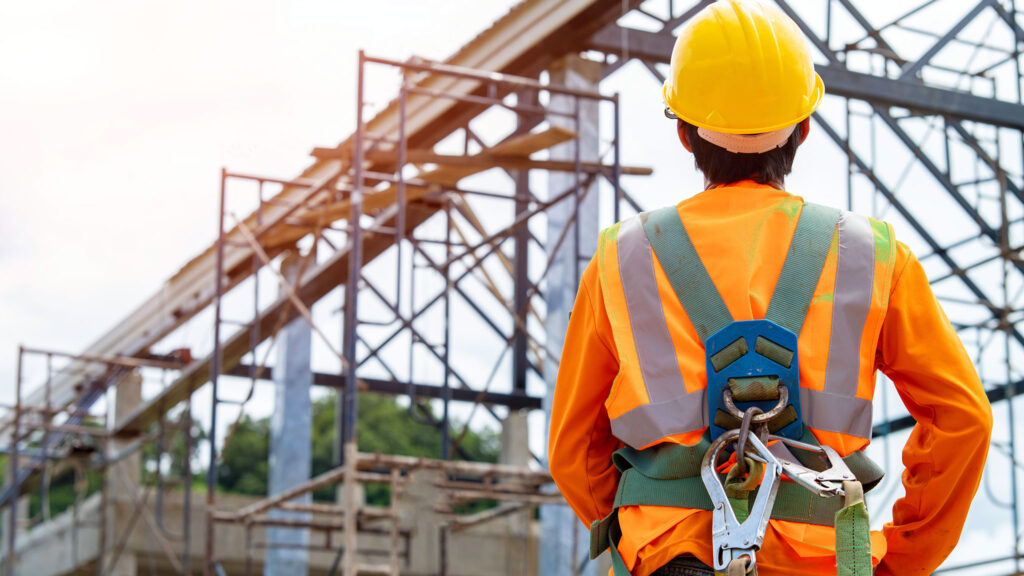
You fell from a scaffold at a construction site in Williamsburg. Or from a ladder during a brownstone renovation in Park Slope. Or perhaps an unsecured elevator shaft at a construction site in Long Island City — and a few seconds changed your life. If this sounds familiar, you need to know one thing: New York State law is on your side.
Scaffold Law — the law that protects workers in NY
Section 240 of the New York Labor Law, known as the Scaffold Law, is one of the most worker-friendly regulations in the entire United States. In short: if you fell from a height at a construction site, the building owner and the general contractor are fully liable — regardless of whether you made a mistake yourself. They don’t even have to know that the scaffolding was unstable. It is enough that they did not provide adequate safety measures.
Additionally, Section 241(6) imposes an obligation on owners and contractors to comply with detailed safety regulations. A missing helmet, an unsecured edge, a faulty ladder — every violation is a potential basis for a claim.
How much can you get for a construction accident
It depends. On the type of injury, how long you are unable to work, and the costs of medical treatment and rehabilitation. But to give you an idea of the scale: settlements in scaffold fall cases reach several million dollars. Falls into unsecured elevator shafts — similarly. These are not abstract numbers — this is real money that injured workers have received for their injuries.
Compensation may include medical expenses (past and future), lost wages, pain and suffering, and — in the case of permanent impairment — a pension or a lump-sum payment.
Check the Kaminski law firm profile in the PolishPages directory
What to do after an accident — the first 48 hours
These two days determine the outcome of your case. Call an ambulance or go to the emergency room — even if you think “it’s probably nothing.” Report the accident to your supervisor in writing. Take photos of the scene with your phone — scaffolding, ladders, unsecured edges, anything that could have been the cause. Collect witness information. And no — absolutely not — do not sign any documents from the employer’s insurance company.
What to look for when choosing a construction accident attorney
- Knowledge of the Scaffold Law and Section 241(6) — these are not regulations that every lawyer knows. You need someone who has handled dozens of cases using them and knows how to prove a violation of safety regulations.
- Cooperation with litigation firms — construction accident cases often end up in court. An attorney who works with a large litigation firm has the resources for experts, accident reconstruction, and full trial preparation. This provides bargaining power in settlements.
- Experience with Polish construction workers — the language barrier in court is a serious problem. An attorney who knows the realities of Polish workers on construction sites in NY — working conditions, pressure from subcontractors, fear of losing employment — will handle the case more effectively than someone who does not understand these realities.
- Free consultation and contingency fee — you pay nothing until you win. If an attorney wants money before opening the case, walk away.
The Kaminski law firm meets these criteria — check the profile in the directory.
Every day of delay is a risk that evidence will disappear and witnesses will forget. Call for a free consultation: 718-389-0450.