Attorney Advertising
A worker hurt by a machine or forklift in New York generally receives Workers’ Compensation and cannot sue their own employer. But they may recover damages from other companies – the maker of defective equipment, the company that serviced it or the firm that rented it out. This is a third-party claim.
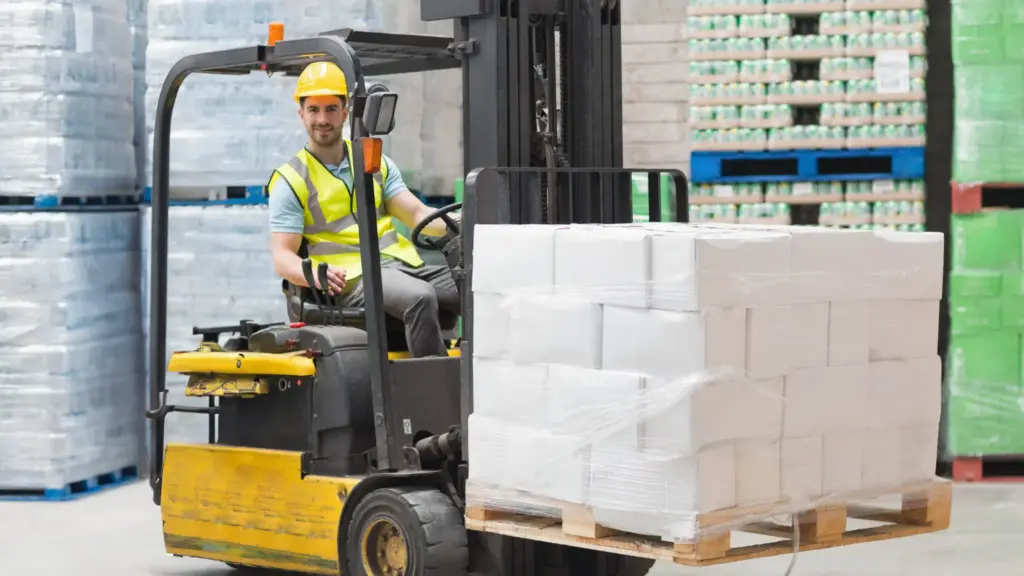
Warehouses in Maspeth and Long Island City, plants in Ridgewood, distribution centers along the Brooklyn-Queens Expressway – many of them depend on Polish workers. Running forklifts, electric pallet jacks, presses, shears and conveyors is hard, fast-paced work, and a single equipment failure can mean a broken bone, a crushed hand or a spine injury. After an accident like that, workers usually hear the same line: “Workers’ Comp will take care of everything.”
That is only partly true. Workers’ Compensation pays for medical care and part of your lost wages, but it is not always the whole story. If a company other than your employer contributed to the accident, New York law lets you bring a separate claim against that company. Below we explain when that happens, who it can involve and what is worth doing in the first days after the accident.
Why doesn’t Workers’ Compensation end the case?
Under Section 11 of the New York Workers’ Compensation Law, an employer’s liability through workers’ compensation insurance replaces other forms of liability to the employee. In practice, a worker whose employer is properly insured generally does not sue that employer in court but receives benefits instead. The same rule protects coworkers: an injury caused by someone at the same company is covered by Workers’ Compensation, not a lawsuit.
That protection does not extend to outside companies. Under Section 29 of the same law, a worker injured by someone who is not employed by the same employer may seek damages from that party – and does not have to give up Workers’ Compensation benefits to do so. Both tracks can run at the same time.
The difference matters. Workers’ Compensation does not pay for pain and suffering, and wage-loss benefits are capped by statute. A claim against a third party follows the ordinary rules of civil liability, so its scope can be broader. Every such case, though, has to be evaluated on its facts, not on assumptions. Often the first review is enough to show whether a third party is involved at all.
Who besides your employer can be responsible for a machine accident?
The first group is the manufacturer of the machine or forklift. A manufacturer’s liability may stem from a design defect (for example, no guard where a hand can reach moving parts), a manufacturing defect in a particular unit, or inadequate warnings and instructions. Whether the machine was modified after it left the factory also matters.
The second group is service companies. If an outside contractor repaired a forklift’s brakes, adjusted the sensors on a press, or removed a guard and never put it back, that work can become the center of the case. The same goes for a rental company that delivered equipment in poor condition, with safety features not working, or without instructions.
The third group involves the workplace itself. In large logistics centers, several companies share one building: the property owner, the warehouse operator, carriers and subcontractors. When a worker is employed by a staffing agency but works in the agency client’s warehouse, the question of who counts as the “employer” under the law can be disputed. The answer determines which companies a claim can be brought against.
The equipment supply chain can also include distributors and sellers, and for machines brought in from overseas, importers. Whether and to what extent they are responsible depends on the circumstances of the case. That is why it helps to trace the machine’s full path from the factory to the floor where the accident happened.
What shapes the course and scope of a third-party claim?
The most important elements are evidence that the equipment was defective or poorly serviced, and medical records showing the extent of the injury and how it affects your ability to keep working. Lost earnings, medical costs not covered by benefits, and the way the injury changes your daily life also matter.
There is also the Workers’ Compensation side to settle. Under Section 29, the insurance carrier that paid benefits has a lien on the money recovered from the third party – up to the benefits paid, reduced by a fair share of the cost of obtaining that recovery, including attorney’s fees. A settlement with the third party may also require the carrier’s written consent or court approval. Skipping that step can put future benefits at risk.
Timing matters too. The general deadline to file a personal injury lawsuit in New York is three years (CPLR §214), but when a public entity is involved, the deadlines are much shorter. So it pays to start identifying the parties early.
Call us and talk it through in Polish – the consultation is free: 718-383-0100
What should you preserve after a warehouse or plant accident?
The single most valuable piece of evidence is often the machine itself. After an accident, an employer may want to repair it quickly, replace a part or send the forklift back to the rental company. That is why it is so important to note the make, model and serial number as early as possible and, if you can, to photograph the scene, the damaged parts and the data plate. If the machine has already been repaired or removed, write down who did it and when. Even that can later show where to look for replaced parts and repair reports.
Federal OSHA rules for powered industrial trucks (29 CFR 1910.178) require, among other things, that every operator be trained and evaluated. Training records, inspection logs, service reports and earlier complaints from other workers show whether the problem was known before. In many facilities these records exist only in the company’s system, so it is worth noting where they are kept.
Witnesses are just as important. Coworkers on the same shift, a driver waiting to be loaded, a mechanic who came out for a repair – write down their names and phone numbers right away. Within a few weeks some of them change jobs, and in warehouses with high turnover they can be hard to find.
After the accident you may also get calls from the insurance carrier for the manufacturer, the service company or the building owner asking for a “quick recorded statement” or a signature on a written account. Such documents often describe the event their own way – for example, as operator error. Before giving any statement to an outside company, it makes sense to talk with the firm first.
How to prepare for your first conversation with The Stein Law Group
- A description of the accident. The date, time, location in the building and what exactly the machine or forklift was doing just before it happened. A short note written in the first days, in Polish if that is easier, is very valuable.
- Equipment details. Make, model, serial number, and whether the equipment was company-owned, rented or recently repaired. Phone photos are enough.
- The names of every company involved. Your employer, staffing agency, warehouse operator, building owner, service company. Pay stubs, ID badges and emails help.
- Your Workers’ Compensation case number. If a case is already open, the Workers’ Compensation Board number and letters from the carrier make it possible to connect both tracks right away.
- Medical records and a list of witnesses. Hospital discharge papers, referrals, the names of your doctors and contact details for people who saw the accident.
The Stein Law Group, with offices in Greenpoint and Maspeth, handles workplace injury cases in New York and New Jersey – see the full range of cases the firm handles.
Questions and answers
Does a claim against the manufacturer mean losing Workers’ Compensation?
No. The law allows you to receive benefits and pursue damages from a third party at the same time. Any recovery, however, has to be reconciled with the carrier that paid your benefits.
Can I sue my employer if they never fixed the forklift?
Generally not – against an insured employer, the remedy is Workers’ Compensation. The situation is different if the employer did not carry the required coverage; that has to be reviewed separately.
What if I worked through a staffing agency?
Then the key question is who legally counted as your employer: the agency, the company where you did the work, or both. That determines which companies remain “third parties” and whether a claim against them is possible.
How much time do I have?
The general deadline for a personal injury lawsuit is three years, but evidence disappears much faster. When a public entity is involved, the deadline to file a notice can be counted in days.
A machine accident is rarely just “bad luck.” There is often a specific cause behind it: a removed guard, worn brakes, a sensor nobody checked. Identifying that cause determines whether there is another path beyond Workers’ Compensation.
The sooner the equipment details and witness names are secured, the easier it is to see who is really responsible. Schedule a conversation with attorney Adam J. Stein: 718-383-0100
This article is for general information only and is not legal advice; reading it does not create an attorney–client relationship. Every case requires an individual assessment – please contact The Stein Law Group about your situation. Attorney Advertising. Prior results do not guarantee a similar outcome.