Judge an energy-efficient window by its ratings, not its pane count. Check the U-factor and SHGC on the NFRC label, match the frame material to your building and budget, and get ENERGY STAR certification for your climate zone written into the contract. Careful, airtight installation matters just as much.
A draft along the sill, frost on the glass in February and the M train rattling past on the elevated tracks over Myrtle Avenue. Plenty of homeowners in Ridgewood, Bushwick and Maspeth know that combination all too well. Old windows cost you twice: heat slipping out in winter and air conditioning slipping out in summer, not to mention the noise.
Replacing windows is a long-term decision, though, and quotes can differ on everything: material, glass, installation method and price. In this guide we compare frame types, explain what the labels mean, walk through what drives the cost and cover what to watch for when hiring a contractor in New York, New Jersey and Connecticut. By the end, you will know which questions to ask and how to compare offers side by side.
Vinyl, aluminum, fiberglass or wood: how do frames differ?
Vinyl (PVC) windows are the most common choice for homes. They insulate well, never need painting and suit most buildings. On larger sashes, ask about frame reinforcement, because it determines how stiff and durable the window will be.
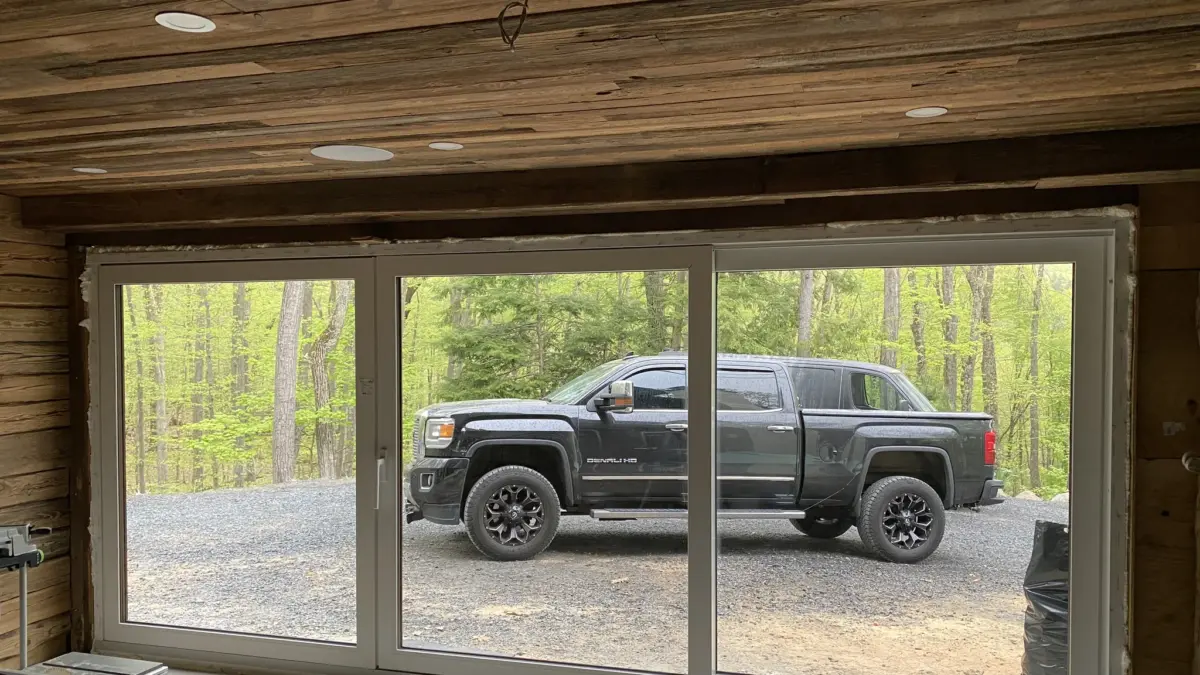
Aluminum allows slim frames and large glass areas, which is why it is popular for modern homes, storefronts and wide patio doors. The metal itself conducts heat readily, so energy-efficient aluminum windows rely on frames with a thermal break. Fiberglass, on the other hand, is dimensionally stable and barely reacts to temperature swings, which helps the window stay tight over the years.
Wood, often with exterior cladding (wood-clad), brings a warm look and fits older homes well. It does ask for more care than vinyl, especially on the interior side. For example, pdpwindows.com lists vinyl windows on VEKA profiles, Vetrex windows, and Schüco and Aluprof systems.
When choosing a material, think about how long you plan to stay and how much upkeep you are willing to do. In a rental property, durability and easy care come first; in a row house with character, the look has to match the facade. Frame color, grille pattern and profile depth are all visible from the street, so do not pick them from a catalog alone.
Double or triple pane, Low-E and the NFRC label
Triple-pane glass usually insulates better than double-pane, but it is heavier, more expensive and needs a frame that can carry it. A well-chosen double-pane unit with a Low-E coating is often a sensible middle ground. So rather than counting panes, look at the ratings of the whole window.
Low-E stands for low emissivity: an invisible coating on the glass that reflects radiant heat back into the room and lets less UV light through. The NFRC label lists the window’s performance: U-factor shows how much heat escapes (lower is better), and SHGC shows how much solar heat comes through. According to ENERGY STAR’s advice on upgrading windows, a U-factor of 0.22 or lower is recommended in northern areas, and switching to certified windows lowers household energy bills by an average of 12%.
ENERGY STAR also says every window should carry both an ENERGY STAR label and an NFRC label, and that the exact U-factor and SHGC values belong in the contract. Ask the installer to leave the NFRC labels with you, since you may need them for incentive programs. You can look up the climate zone for your address with the search tool on the ENERGY STAR website.
If you live on a busy street, near an elevated subway line or under the LaGuardia flight path, ask about acoustics separately. Noise is handled mainly by an airtight installation and the makeup of the glass, such as laminated glass or panes of different thickness. Adding a third pane alone does not always do the trick.
What drives the cost of replacing windows?
The starting point is the number and size of the windows, the frame material and the glass package. Unusual shapes, arches and custom-made units cost more than standard sizes. Frame color and finish, the operating style and the hardware also play a part.
The second group of factors has to do with the building. The condition of the openings and lintels, whether the full frame must be replaced instead of inserting a new unit into the old one, access to upper floors of a row house and scaffolding over the sidewalk can all move the price noticeably. In homes built before 1978, lead-safe work practices are part of the job too.
Here is where things get tricky: two quotes for what look like the same windows can cover very different work. One includes removal, trim, sealing and haul-away; the other covers only delivery and setting the units. Compare line by line, not just the total at the bottom of the page. Also ask for a contract that lists the U-factor and SHGC of each window and confirms ENERGY STAR certification for your climate zone, so the two offers can actually be compared.
The third group is paperwork and logistics: permits, landmark requirements, disposal of the old windows and production lead times. Watch out for outdated information about tax breaks, too. According to ENERGY STAR, the federal tax credit for windows was available through December 31, 2025, so do not build your budget around it today.
Wondering which glass and frame combination suits your building? Call for a free consultation (Polish spoken): 718-456-3150
Brownstone, historic district or suburban home?
In Brooklyn brownstones and older Queens row houses, window openings are often out of square and the walls are thick and sometimes damp. The measurements have to account for that, or even an excellent window will not seal properly. In co-ops and condos, the board often sets rules for how windows look from the street, so get approval before you order.
If the building is an individual landmark or sits in a historic district, replacing windows requires a permit from the Landmarks Preservation Commission. The commission says the majority of these applications are handled at staff level, but the permit has to be in place before work begins. You will find more in our guide to windows in historic buildings and new construction.
New Jersey and Connecticut have more single-family houses and townhomes, often with more windows on the gable walls and large patio doors. There, south- and west-facing glass deserves extra attention, because SHGC matters in summer. In winter, wind across open lots makes an airtight installation especially important.
What to look for when choosing a contractor
The same window model can perform beautifully or leak after the first winter. The difference comes down to measuring, preparing the opening and installation, which is the crew’s work, not the manufacturer’s catalog.
When you compare offers, look beyond the price per window and pay attention to how the contractor works. These five points will help you decide who to trust with your home.
- On-site measuring and inspection. Measurements taken over the phone or from old plans are asking for trouble. The contractor should look at every opening and assess the masonry, frames and sills.
- The full installation scope in writing. Ask how the crew insulates and seals the joint between the window and the wall, and whether the quote includes removal, trim work and haul-away of the old windows. A free estimate should list these items separately instead of hiding them in the per-window price.
- Safe work in older homes. Replacing windows in a building from before 1978 disturbs old paint that may contain lead. The firm should be EPA Lead-Safe certified and follow lead-safe work practices.
- Experience with buildings like yours. Replacing windows in a historic row house, installing them in new construction and fitting unusual shapes are different jobs. Ask about similar projects and about working with architects if your project calls for it.
- Credibility and communication. Check BBB accreditation and customer reviews. Being able to discuss everything in Polish, from frame color to scheduling, makes the details easier to settle.
PDP Contracting of Ridgewood meets these criteria — see the window offering and customer reviews.
Common mistakes when ordering and installing windows
The first mistake is signing on the day of the sales visit because “the deal ends today.” ENERGY STAR advises avoiding same-day offers and expecting an estimate that stays valid for at least 30 days. That gives you time to compare ratings, not just prices.
The second mistake happens on installation day. Before the crew removes the old windows, check that the new ones match your order and carry both labels. Before the crew leaves, open and close every sash and inspect the caulking, because small issues like these tend to surface only with the first frost.
The third mistake is poor timing. According to ENERGY STAR, high-performance windows often take 6 to 12 weeks to arrive, so an order placed in October may show up in the middle of winter. Plan ahead, and after the installation check whether your current heating system is now oversized. Our guide to heating and cooling can help with that.
How to get ready for a window replacement
Make a list of your windows with rough sizes and mark the ones where you feel drafts, see condensation or hear the street. Find out whether the building sits in a historic district and whether the board has rules about appearance. With that list in hand, the conversation with a contractor gets to the point quickly, and measuring goes faster.
Ask for quotes based on the same specifications so you are comparing offers on the same terms. Ask about the installation method, the sealing materials and who is responsible for any follow-up fixes. A good window, ordered without rushing and installed with care, pays you back with a quieter home and lower bills.
Get a free consultation: 718-456-3150
ENERGY STAR is a trademark of the U.S. Environmental Protection Agency; NFRC of the National Fenestration Rating Council; Vetrex of Vetrex Sp. z o.o.; VEKA of VEKA AG; Schüco of Schüco International KG; Aluprof of Aluprof S.A.; BBB of the International Association of Better Business Bureaus. All trademarks belong to their respective owners. Polish Pages is not affiliated with or endorsed by these companies.