When ordering stone sills, give the width and depth of each opening after the new windows are in, and decide how far each sill projects and wraps into the sides. Then choose stone, thickness, edge and finish. Price depends on material, quantity, edge work, cutouts and old sill removal.
The window sill is usually the last thing anyone thinks about during a remodel, often only when the window installer asks, “So what are we putting here?” That is a shame, because a well-planned stone sill lasts for many years, while a badly measured one spoils the look of brand-new windows from day one. A gap at the frame, a crooked line against the wall, or a slab covering half the radiator can be more irritating than plenty of bigger problems.
This guide walks you through the whole order: from measuring, through choosing the material and edge, to the items that appear on a quote. Whether you live in a postwar house in Ewing, a townhouse in Bucks County or a brownstone apartment in Brooklyn, the principles are similar. The details differ, and we cover them below.
How do you measure a window and design a stone sill?
Measure only after the new windows are installed and the openings are finished. You need the width of the opening between the masonry, the depth from the window frame to the face of the wall, and how far the sill should project past the wall. Take measurements at several points, because old walls are rarely perfectly straight, and a difference between the left and right side of an opening is normal in older buildings.
A common solution is a sill with “ears,” a slab wider than the opening that extends a little onto the wall on each side. It looks more finished and covers the edges of the plaster. The projection past the wall is chosen to protect the wall below the window without getting in the way of sashes, curtains or blinds. If there is a radiator under the window, the sill should not seal it off, because warm air needs to rise freely along the glass.
Also decide whether you need an interior or exterior sill. An interior sill is mainly part of the room and can be installed level. An exterior sill must slope outward and usually has a drip groove underneath so rainwater does not run down the facade. These are two different jobs, and it helps to list them separately when you ask for a quote.
Thickness, edge and finish
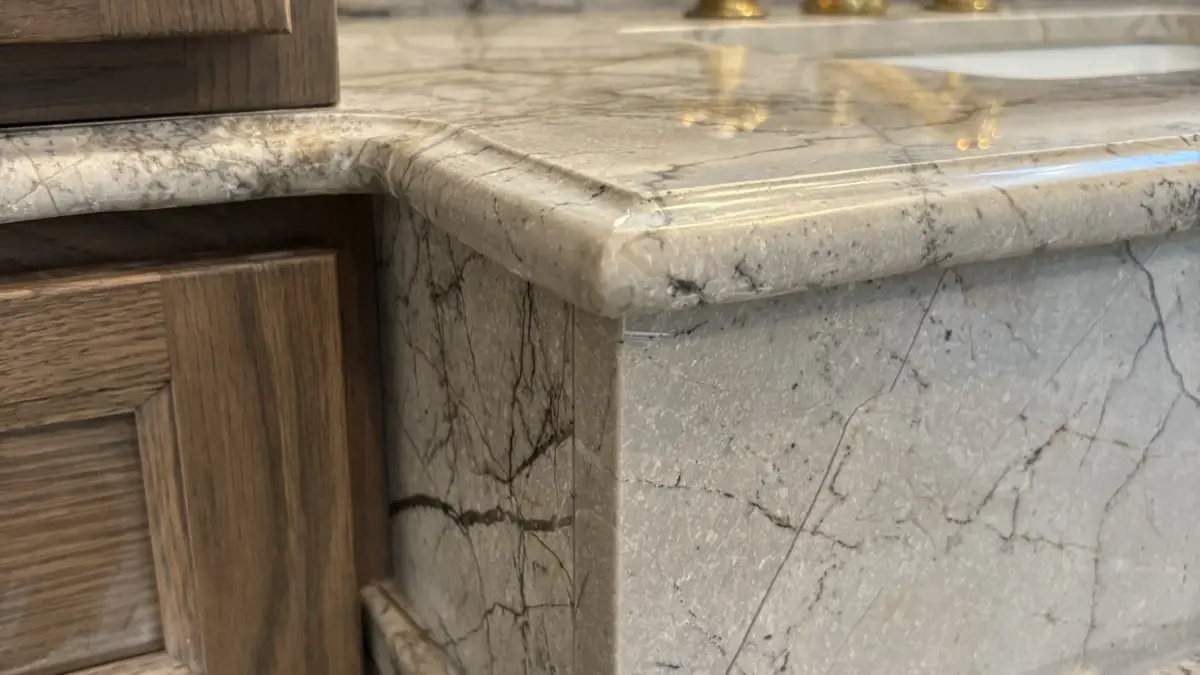
Thickness is chosen to suit the depth of the opening and the look you want, and a heavier-looking front edge can be created by laminating a strip of stone underneath. The front edge can be square with a slightly eased corner, rounded or half-round; at a window where children play, a softer profile is the safer bet. If the sill has ears, decide whether the sides get the same profile.
The surface finish comes down to polished or honed. Polished stone reflects more window light and shows the pattern better, while honed stone looks calmer and hides wiping streaks. If you keep potted plants on the sill, ask about sealing and use saucers.
Granite, marble or quartzite?
Granite is the practical choice: tough and resistant to daily use, good where things get set down and moved, or where the cat jumps up to watch the street. Marble gives a bright, elegant finish and visually lightens a room, but it is more sensitive to acidic liquids and harsh cleaners. Quartzite combines strength with a bold natural pattern and works well when the sills should match a stone kitchen countertop.
What determines the cost of stone window sills?
Material and quantity matter most. A single sill cut from a remnant costs differently than a full set for the whole house cut from one or two new slabs. A large order allows better cutting layout and a consistent color in every room, but it means buying full slabs.
Fabrication is the second factor. Every sill with ears, a profiled edge, finished sides or a thickened front takes more work than a plain rectangle. Exterior sills with a drip groove also need extra fabrication. Then there are cutouts, for example around radiator pipes, and unusual opening shapes such as bay or corner windows.
The third group of costs covers work on site: removing old wood, terrazzo or tile sills, patching plaster, leveling the base, the floor level and access, and whether installation happens together with the window replacement or separately. Ask which of these items are included in the quote and which need another crew.
Want a price for sills on every window at once? Call for a free consultation in Polish: 609-608-5750
Window sills in New Jersey homes and New York brownstones
In single-family homes around Mercer County, Princeton or Hamilton, sills are most often replaced along with the windows. The problem is timing: the window crew works fast, while stone sills need to be measured, cut and delivered. Agree on the sequence with both contractors up front so the windows do not sit for weeks with unfinished openings.
In New York City, landmark rules come into play. If the building is in a historic district or is an individual landmark, replacing windows on the facade usually requires a permit from the Landmarks Preservation Commission. The commission’s guidebook lists sills among the elements that must be shown in drawings when applying for new windows. The details are in the LPC permit guidebook chapter on windows; it focuses mainly on facades, so the commission decides what your specific scope of work requires.
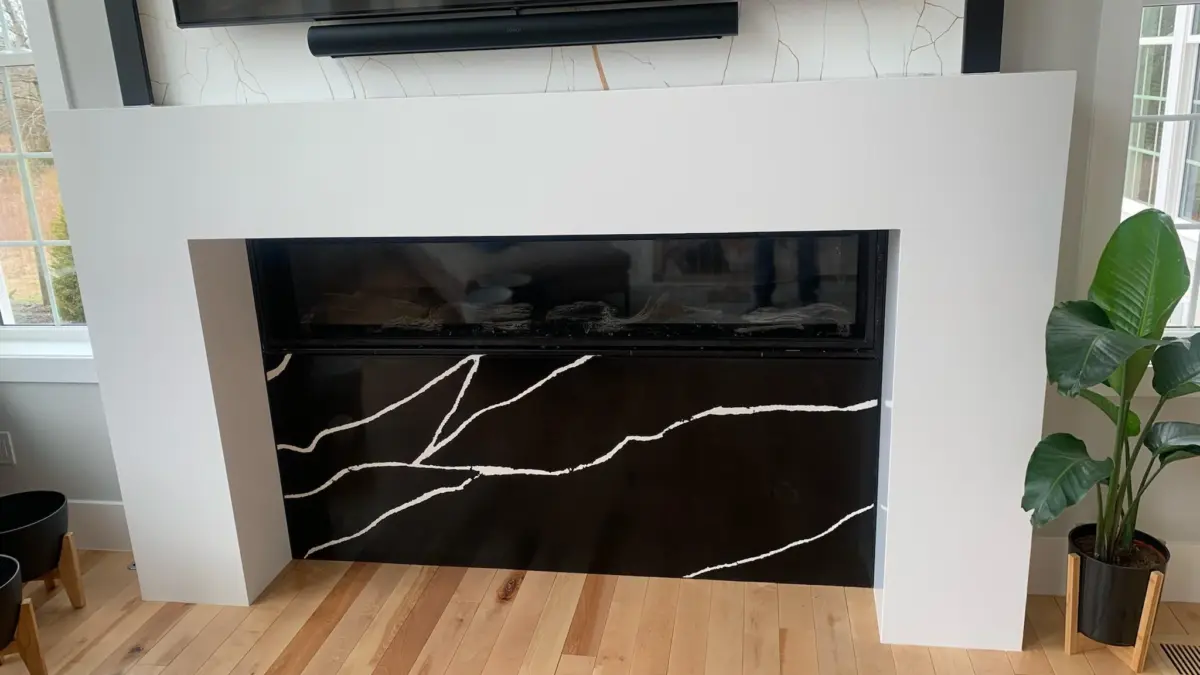
A sill is rarely the only stone element in a room. If you are also planning a fireplace surround in the same space, choose both from one material; read more in our guide to ordering a stone fireplace surround.
What should you look for in a window sill contractor?
A sill seems like a simple job, so it is tempting to hand it to the first crew that comes along. Yet with a dozen or more windows, small errors in measuring or color multiply with every piece.
When comparing offers, check these points first:
- Custom fabrication. Every opening is a little different, especially in older homes. Sills should be cut for your specific windows, not picked from stock lengths and trimmed on site.
- A choice of stone. It helps when the contractor can show you granite, marble and quartzite side by side. That makes it easier to judge which stone suits your floors, window frames and any kitchen countertop.
- Experience working with stone. Ears, profiled fronts and sloped exterior sills take skill. A company with many years of experience in the trade knows the typical traps of old walls.
- Service area. Check whether the contractor serves your area, whether that is New Jersey, Pennsylvania, Delaware, New York or Connecticut. That determines whether they will come out to measure and install.
- A free estimate and a conversation in Polish. Discussing measurements and finishes in your own language lowers the risk of mistakes. A free estimate lets you compare material options without pressure.
Euro 1 Countertops Granite & Marble, Inc. of Ewing meets these criteria — explore the full listing and customer reviews.
Common mistakes and how stone compares with other materials
The most common mistake is measuring before the windows go in. A new frame may sit differently from the old one, so the depth of the opening changes after the replacement. The second is a sill that is too deep over a radiator and blocks warm air. The third is ordering sills in batches from different slabs, so the stone in the living room ends up a different shade from the one in the bedroom.
And how does stone stack up against the alternatives? Sills made of engineered wood or plastic cost less up front, but at windows where condensation collects, their edges can swell or delaminate over time. Solid wood is warm to the touch but needs its finish renewed. Stone costs more at purchase, yet it needs no varnish and is easy to keep clean. In the end, the right choice depends on how long you plan to stay in the house.
As for timing, many people schedule window replacement for the warmer months, when open windows do not chill the house. That is also when crews are busiest. Book the sill measurement as soon as the window installation date is set, and choose the material earlier, at your own pace, by looking at samples. Sample sill stones are also shown on the page with window sill materials.
Before you order: a one-page checklist
List every window with the opening dimensions, mark where a radiator sits under a window, and decide whether the sills should have ears. Note whether you need interior sills only or exterior ones too, and take photos of the openings once the windows are installed.
With that list, the quote is quick and specific, and the fabricator can see right away how many slabs the whole house needs. You can also ask for a comparison of two stones, say granite and quartzite, in the same thickness. You can go over measurements and material choices with Euro 1 Countertops Granite & Marble, Inc..
Get a free consultation: 609-608-5750
The information in this guide is general. Window requirements for landmarked buildings and installation details for a specific wall should be confirmed with the appropriate agency and your contractor.