
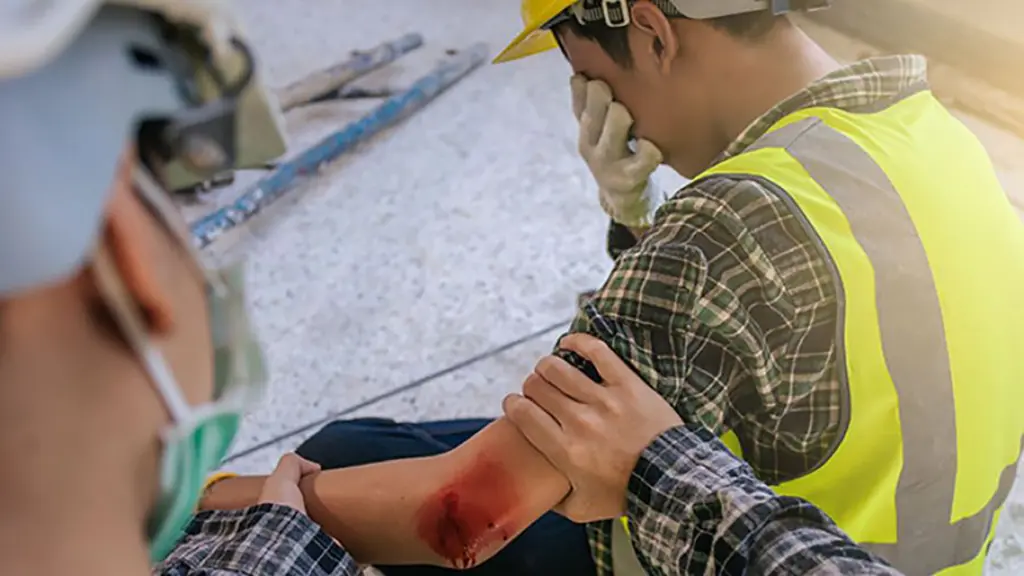
Yes. In New York, an injured construction worker can pursue compensation regardless of immigration status or how they were paid. Labor Law §240 and §241 protect workers paid in cash and without a written contract, and the claim usually runs against the building owner and general contractor.
The scene is familiar on job sites across Brooklyn and Queens. Pay handed over in an envelope on Friday, no written agreement, your name saved only in the foreman’s phone. Nobody minds the arrangement until something goes wrong — and then a scaffold plank gives way, or a tool comes down from three floors up, and within an hour the contractor stops picking up the phone.
What the injured worker usually hears next is that “without papers there’s nothing to look for in court.” That belief is wrong, and it costs people a great deal. New York protects those who work at height through one of the few scaffold statutes of its kind in the country, and it does not condition that protection on immigration status or on whether wages arrived by check, by transfer or in cash. This guide explains where the protection comes from, what drives the value of a claim, and which steps matter once an accident has already happened.
Where does the protection for a worker with no contract and no papers come from?
Two state statutes form the foundation. Labor Law §240, known as the Scaffold Law, governs elevation-related work: falls from scaffolds, ladders and floor openings, and injuries caused by falling objects. Labor Law §241 reaches more broadly into safety on construction, demolition and excavation work. Liability under both provisions rests on the property owner and the general contractor — the parties that control the site, not the coworker on your crew.
What matters just as much is what these statutes do not require. They do not require a written employment agreement, a Social Security number, work authorization or pay stubs. New York courts have long recognized that the protection covers people who actually performed covered work, including those hired informally and paid in cash. The question is whether the person was doing work the statute covers and was hurt because required safety devices were missing or inadequate.
It helps to picture the situations involved. Typical §240 events include work on an unstable or improperly footed ladder, a scaffold without guardrails, roof work with no harness or lifeline, the collapse of a temporary platform, and being struck by material lowered from above without proper rigging. The common thread is straightforward: the contractor failed to supply the protective devices the law demands — and that duty belongs to the contractor, never to the worker.
A separate track runs alongside it. Workers’ compensation is the insurance system for on-the-job injuries, administered by the New York State Workers’ Compensation Board, and those benefits are likewise available regardless of immigration status. A Labor Law claim against the owner and general contractor is a distinct case from a workers’ compensation claim. An injured worker can move on both tracks at once, because they involve different parties and cover different kinds of loss.
What determines the value of a construction accident claim?
The honest answer is: the circumstances, not a chart. A claim is built from medical and rehabilitation costs — those already incurred and those still ahead — lost wages, diminished capacity to work in the trade, and physical and emotional suffering. In serious orthopedic or neurological injuries, the largest single item is often not what has already happened, but what the worker will never earn over the years to come.
Being paid in cash complicates the calculation of lost earnings; it does not defeat it. Income gets documented by other means: testimony from coworkers, a payment history kept in a phone, text threads with the foreman, prevailing rates for the trade in that market. And a point worth stating plainly — questions about immigration status or payment arrangements should not keep anyone from a consultation, because a conversation with an attorney is protected by attorney-client privilege.
The cost of pursuing a case is not a barrier to entry either. Injury cases are handled on a contingency fee: the attorney is paid only out of funds actually recovered, and the first consultation costs nothing. If the case ends without a recovery, the client owes the firm nothing for its work. That structure exists precisely so that the people with the least cash on hand can still bring a claim.
A frequent worry is the absence of health insurance — how do I pay for treatment before the case is over? There are answers here as well, from workers’ compensation benefits covering accident-related care to physicians who agree to be paid out of the eventual result. That belongs on the agenda for a first consultation. It is not a reason to postpone treatment.
Free case review after a construction accident, in Polish or English: 347-563-2605
Why this matters so much on New York job sites
Polish crews today work everywhere from Williamsburg and Greenpoint to Maspeth and Ridgewood, very often for third- or fourth-tier subcontractors where nobody asks about paperwork. The further down the subcontracting chain a job sits, the more often training, protective equipment and supervision go missing. And missing safeguards — not bad luck — are the most common reason people fall from height.
Then comes the social pressure: the injured worker is told that reporting the accident will sink the boss, that the whole family will lose work, that it is better to take a few hundred dollars “for treatment” and sign that nothing happened. Those hood-of-the-car settlements get raised later by insurance carriers, which is why nothing should be signed without understanding it. Sound familiar? That is exactly why the first conversation belongs with a lawyer rather than with the contractor’s representative.
It is also worth knowing that reporting an accident is not informing on your crew. A Labor Law claim is aimed at the property owner and the general contractor — parties carrying insurance for exactly this situation — not at the foreman or the guys working next to you. In practice these cases play out between attorneys and insurance carriers, not “against people from the site.”
There is one more layer: wages, which on informal jobs are frequently shorted or never paid at all. Anyone facing unpaid wages on top of an injury will find that subject covered separately in our guide to recovering unpaid wages for cleaning and caregiving work in New York. And because injury claims run against a clock, it is worth knowing the filing deadlines in New York and New Jersey — especially on public projects, where notice periods are unforgivingly short.
What to look for when choosing a lawyer for a construction case
- Real experience with Labor Law claims. Construction accidents are their own field, with a body of case law built around §240 and §241. The attorney should be able to explain who bears responsibility in your particular owner–contractor–subcontractor configuration, and why.
- A calm approach to off-the-books work. A lawyer who handles these cases treats cash payment as something to be documented, not as an obstacle. The first questions should be about the accident, not about your status.
- Speed in preserving evidence. A job site changes from one day to the next: scaffolding comes down, crews scatter to other jobs, camera footage is overwritten. What counts is a firm that moves in the first days, not the first months.
- Conversation in your own language, without a middleman. The details of the equipment, the sequence of events and the foreman’s instructions have to be established precisely. Speaking directly with the attorney reduces the risk of distortions that the other side will later exploit.
- A clear fee arrangement in writing. The contingency structure should be explained at the first meeting: what the fee covers, what happens to case expenses, and what you owe if the case is lost. Evasiveness on that question is a warning sign.
Jodré Brenecki, LLP, based in Williamsburg, Brooklyn, meets these criteria — see the firm’s full profile and client reviews.
The mistakes injured workers make most often
The first is silence. An accident reported to nobody — not the foreman, not a doctor — becomes one person’s word against another’s within weeks, though even an informal report by text message carries evidentiary value. The second is treating serious injuries at home. Medical records from the first days are the backbone of a case; an emergency room visit creates a record that cannot be reconstructed later.
The third is talking to the contractor’s insurance carrier unprepared. Recorded statements and documents slid across a table for signature are designed to limit the carrier’s exposure, not to help the injured person. The fourth mistake is the most common of all: postponing any decision “until the leg heals.” Deadlines run from the date of the accident, and evidence disappears far faster than pain does.
There is also a quieter mistake — assuming that because the employer was decent before the accident, the insurance carrier will be decent after it. Those are two different parties with two different interests. The employer may genuinely wish you well; the carrier is measured on what it pays out.
A construction accident on a cash job does not close the road to compensation. Only inaction does. New York gives construction workers some of the strongest protective tools in the country, and it does not ask about immigration status along the way.
The first step is free and carries no obligation. Tell us what happened, in Polish or in English: 347-563-2605
Every situation is different — this guide is for general information only and is not legal advice. Attorney Advertising. For your individual case, please contact Jodré Brenecki, LLP.