Ordering a stone countertop starts once the cabinets are installed, because accurate measurements can only be taken on them. Next you choose the actual slab, decide where seams go, plan sink and cooktop cutouts and pick an edge. Price depends mainly on material, layout, cutouts, finishing and site conditions.
Replacing a countertop sounds simple: pick a color, someone comes to measure, and a while later the new top goes in. In reality, a dozen or more decisions sit between your first phone call and the morning you set a kettle down on fresh granite. Some of them have to be made before anyone shows up with a tape measure, and a few affect the bill more than the type of stone itself.
This guide follows the process in the order it usually unfolds in homes across New Jersey, Pennsylvania and New York. You will learn what to have ready before the measurement, how to look at slabs in a stone yard, what drives the estimate and how to vet a fabricator before you sign. At the end you will find the mistakes that most often hurt the result or drag a remodel out.
What does ordering a countertop look like, step by step?
The first requirement is finished, level cabinets. Stone does not forgive warped boxes: if a cabinet leans even slightly, the slab will rock or crack during installation. That is why the industry standard is to take final measurements only after the cabinets are in, often with a physical template or a laser measuring device. Before you book that visit, you also need the exact models of your sink, cooktop and faucet, because cutouts are designed to the manufacturer’s dimensions.
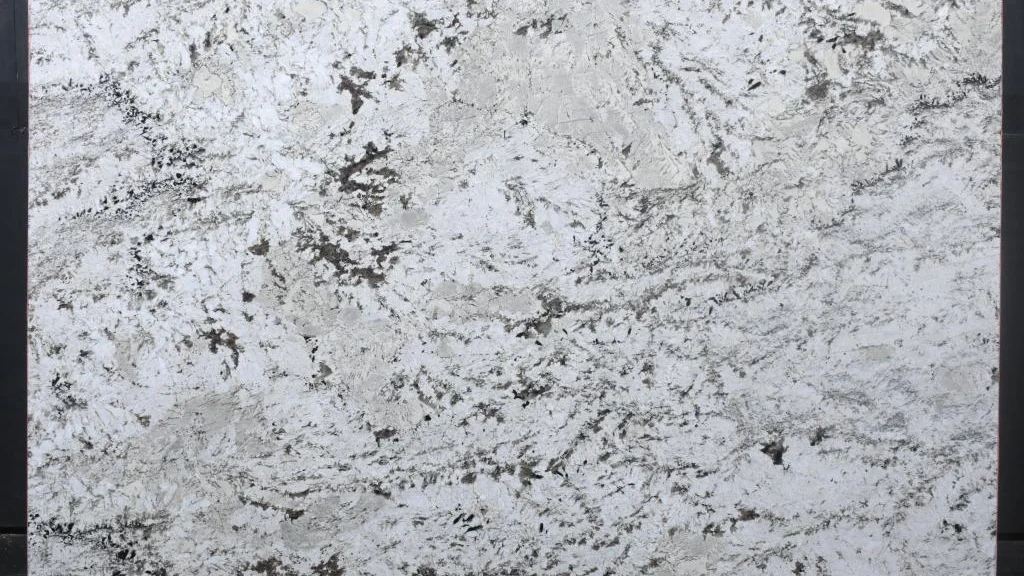
The second stage is choosing the slab. With granite, marble or quartzite, every slab is different, so a palm-sized sample only hints at the character of the stone. Ask to see the specific slab your counter will be cut from and agree on where the seams will fall. On long runs and islands, the direction of the veining is planned too, so the pattern flows from one piece to the next.
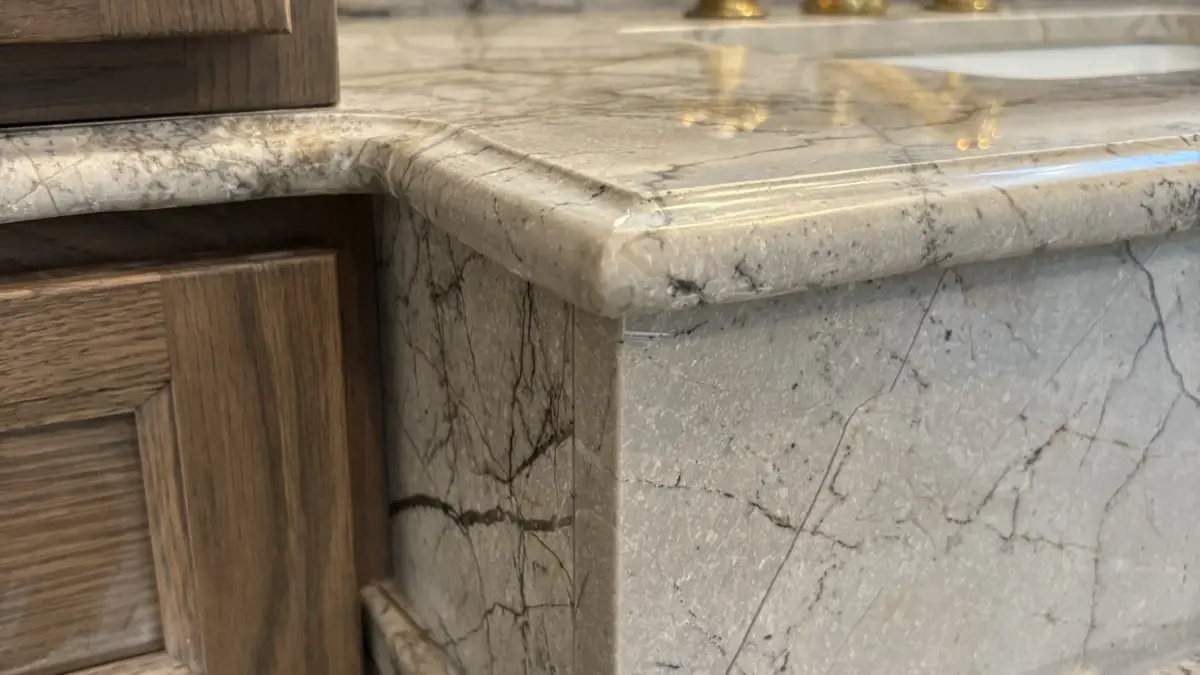
This is also when you choose thickness and edge profile. A simple, slightly eased edge is the easiest to live with because it is harder to chip. More decorative profiles suit traditional interiors but require more fabrication. If you have small children, ask about rounding the corners of the island.
The third stage happens in the shop: cutting, making the openings, grinding and polishing edges. In their hazard alert on silica exposure in countertop fabrication and installation, OSHA and NIOSH recommend doing as much work as possible under controlled shop conditions rather than at the installation site, and avoiding dry cutting. That is good news for you, too: the less trimming in your kitchen, the less dust in your home.
The last stage is installation. The crew sets the pieces, bonds and levels the seams, mounts an undermount sink and seals the joint along the wall. Hooking up water and drain lines usually falls to a plumber, so it makes sense to book one for a day or two after the install.
What determines the price of a stone countertop?
The most obvious factor is the material. Prices vary not only between granite, quartz and quartzite but also within a single type of stone: an unusual color, bold veining or a slab from a distant quarry is priced differently from a common pattern. Slab thickness matters, as does how many slabs are needed to fit every piece of your kitchen.
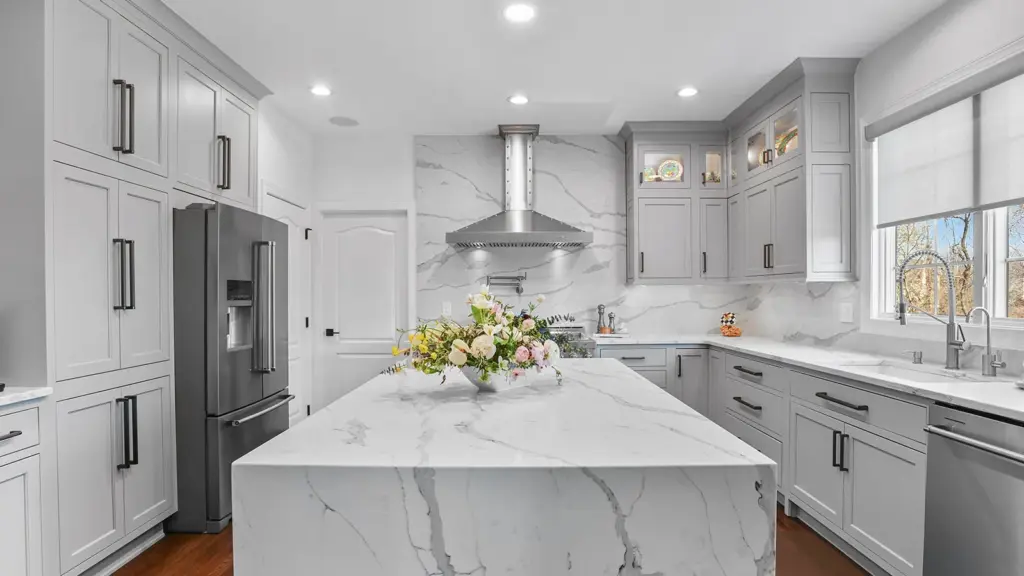
The second factor is layout and labor. An L-shaped kitchen with an island needs more cuts, seams and fitting than a straight run along one wall. Every opening counts: an undermount sink with a polished cutout edge, an induction cooktop, faucet holes, a soap dispenser or a water filter. The edge profile affects the estimate as well, and mitered edges, waterfall sides or a full-height backsplash in the same stone are separate line items.
The third factor is site conditions. Tearing out and hauling away old counters, carrying slabs up narrow stairs, a walk-up with no elevator, booking a freight elevator in a Manhattan building or a long drive from the shop all change the amount of work. In short: a reliable estimate comes only after someone has seen the kitchen, or at least has a detailed drawing with dimensions.
A well-prepared quote should list these items separately. That makes it easier to compare offers and see whether a difference comes from the material or from the scope of work.
Have a kitchen plan you would like to talk through? Call for a free consultation in Polish or English: 609-608-5750
A house near Trenton or a New York apartment: how does location change things?
In single-family homes in Hamilton, Princeton or Doylestown, the challenge tends to be walls and floors rather than logistics. Older houses rarely have perfectly square corners, so the measurement has to account for that, and a backsplash sometimes needs a little trimming on site. If the kitchen is being redone along with new flooring, settle with the crew whether the counter is measured before or after the floor goes in, since that changes cabinet height.
In New York apartments, building rules come into play. Many boards require advance notice of work, set the hours when noise is allowed and make you reserve the freight elevator. Worth pausing here: a long island piece may not fit in the elevator or up the stairwell, so it has to be designed with an extra seam. Ask the managing agent about requirements before you schedule the measurement.
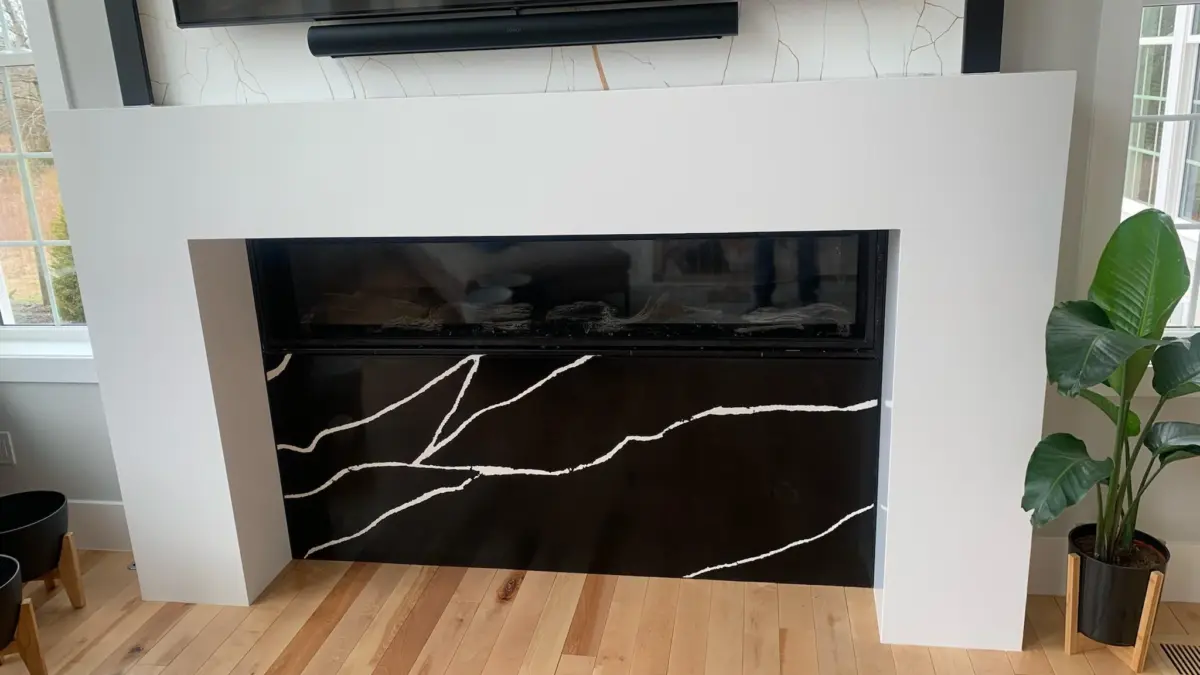
In Pennsylvania, for example in Bucks County, many homes have a kitchen that opens onto a dining or living room. There the countertop becomes part of the whole interior, so many owners order matching window sills or a fireplace surround in the same material. If a bathroom remodel is also on your list, read how to plan stone elements for a bathroom so you can coordinate both orders.
What should you look for when choosing a fabricator?
You buy stone once in many years, so choosing the company matters more than with most finishing work. Before comparing numbers, find out who will be responsible for your countertop from the first conversation to installation day.
These five questions will help you separate a thoughtful quote from a rushed one.
- Experience working with stone. Ask how long the company has been fabricating granite and marble, and request photos of kitchens similar to yours. Years of practice show in the details: tight seams, clean cutouts and edges without chips.
- A range of materials under one roof. It helps when a fabricator works with several kinds of stone, from granite and quartz to quartzite or onyx. You can compare them side by side and get honest advice rather than a pitch for whatever happens to be in stock.
- Custom fabrication. A countertop cut to your kitchen, with openings for your appliances, is the baseline. Check whether the company also handles backsplashes, waterfall sides and mitered edges if you are planning those details.
- A free estimate. A quote should not cost you anything. Ask for an itemized breakdown of material, cutouts, edges and installation, because a single lump sum with no detail makes comparison difficult.
- Easy communication in your language. With so many technical decisions, misunderstandings happen. If you would rather go over the details in Polish, choose a company where you can, and confirm while you are at it that it serves your state.
Euro 1 Countertops Granite & Marble, Inc. in Ewing meets these criteria — see the company’s full listing and customer reviews. Sample materials are also described on the company’s kitchen countertops page.
Which mistakes most often spoil the result?
The most common mistake is booking the measurement before choosing the sink and cooktop. No fabricator will cut an opening by guesswork, and switching models after cutting means a new slab. The second problem is choosing stone from a small sample or a photo alone. A slab in the yard can look completely different from the catalog, especially with heavily patterned stone.
Another trap is an island overhang for bar stools with no support agreed before measuring; our guide to stone bar tops covers this in more detail. Wall outlets above the counter also get forgotten: if the backsplash will be stone, the openings for them must be planned along with the rest of the design.
The last group of mistakes comes from being too optimistic about the material. Marble in a kitchen where lemons and tomatoes are used daily will develop a patina over time. Light quartz right next to the range calls for trivets under hot cookware. If you know these traits in advance, you can choose the material deliberately or combine two different stones in one kitchen.
Finally, something more mundane: disconnecting the old sink and dishwasher. If nobody does it before the crew arrives, tear-out gets delayed and the new top may have to go in on another day. Agree ahead of time on who handles the plumbing and who hauls away the old slabs.
A well-planned countertop will serve you for many years, but its quality is decided during preparation, not installation. Installed cabinets, chosen appliances, a slab you have seen in person and a clear estimate are four things worth having in place before the first cut.
If you are not sure where to begin, sketch the kitchen layout with dimensions, list your appliances and then talk with a fabricator about the stone. That conversation usually shows quickly whether your expectations match the material you have in mind.
Schedule a free estimate: 609-608-5750
This guide offers general industry information; the scope of work, material and cost are always settled with the fabricator after seeing the kitchen.