Planning a stone fireplace surround starts with measuring the firebox opening, the wall and the floor in front of it. Then you settle the hearth, mantel height and depth, and how the slabs are fixed. The quote depends mainly on the stone, slab count, edge profiles and wall preparation.
The decision usually comes quickly: “we want stone instead of that old brick.” Then come the questions few people have ready answers to. Should the surround run all the way to the ceiling or just frame the opening? Should the hearth sit flush with the floor or rise above it? How high should the mantel go so a TV fits above it and nothing overheats? Sound familiar? Every one of those choices changes how much stone you need, how it is installed and, in the end, the price.
This guide walks you through the planning step by step, so you arrive at the first meeting with a contractor with real measurements and a clear wish list. That way you can compare quotes fairly instead of working from a vague “roughly.” What follows is general know-how about granite, marble and limestone surrounds, useful for a wood-burning fireplace as well as a gas or electric insert. The final technical solution should always be chosen by a professional who has seen your firebox.
Which measurements and components do you need to settle before ordering?
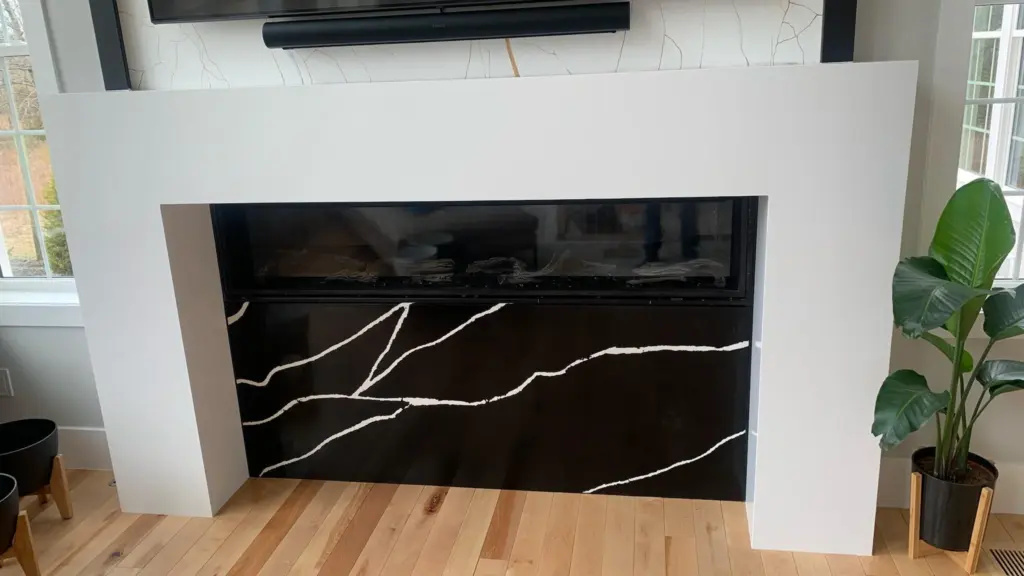
A stone fireplace surround usually has three parts: the frame around the firebox opening, the hearth, which is the slab on the floor in front of the opening, and the mantel shelf. You can order all three or only some of them. Some homeowners skip the shelf in favor of a smooth stone wall up to the ceiling, while others keep the brick and replace only the hearth and mantel.
Before you call a contractor, measure the width and height of the firebox opening, the width of the whole fireplace wall and the ceiling height. Note the distance to the nearest windows, doors and corners, along with any outlets, switches and vents. Take a few photos from different angles and one with a tape measure held against the opening. With that, a contractor can put together a preliminary estimate before visiting.
The hearth can sit at floor level or form a raised ledge you can sit on. A raised hearth needs a solid base, but it does a good job of protecting the floor from sparks and ash. With a flush hearth, the key is matching the height of the finished floor exactly, because a difference of a few millimeters turns into a lip that everyone trips over.
The mantel is where compromise is most common. The higher you mount it, the less heat reaches it, but the harder it is to use for photos or candles. If a TV is going above the fireplace, check the insert and TV manuals for the space required. Required clearances to combustible materials are set by the appliance instructions and local codes, so confirm them before the stone is ordered.
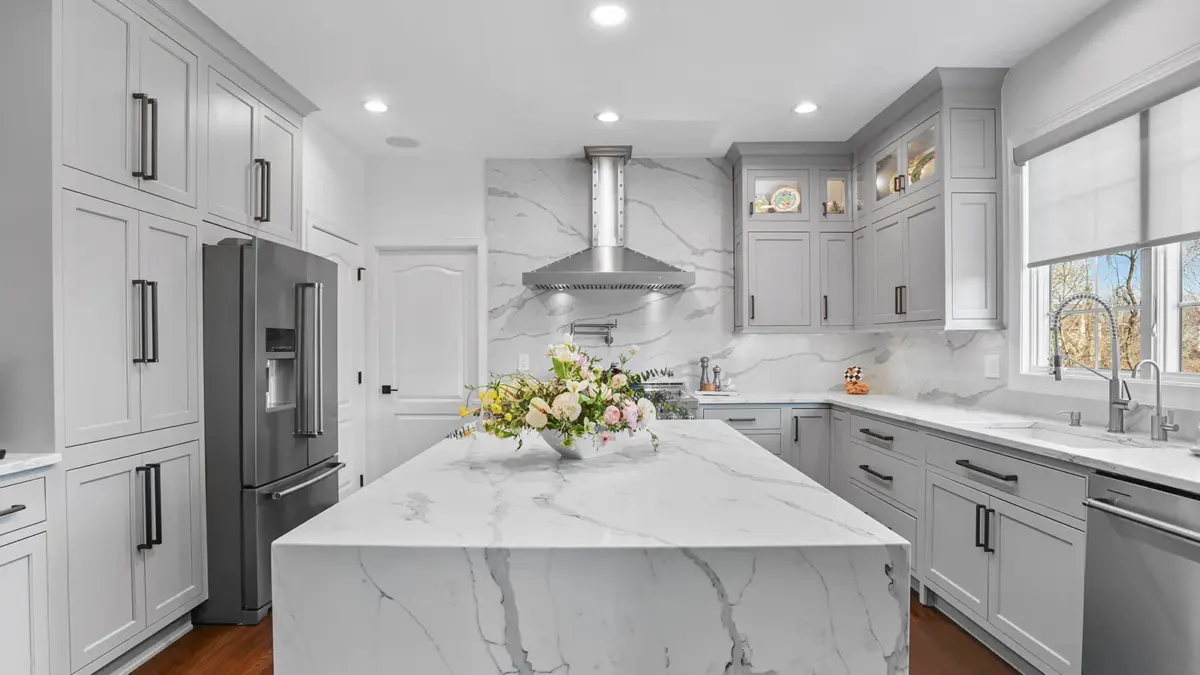
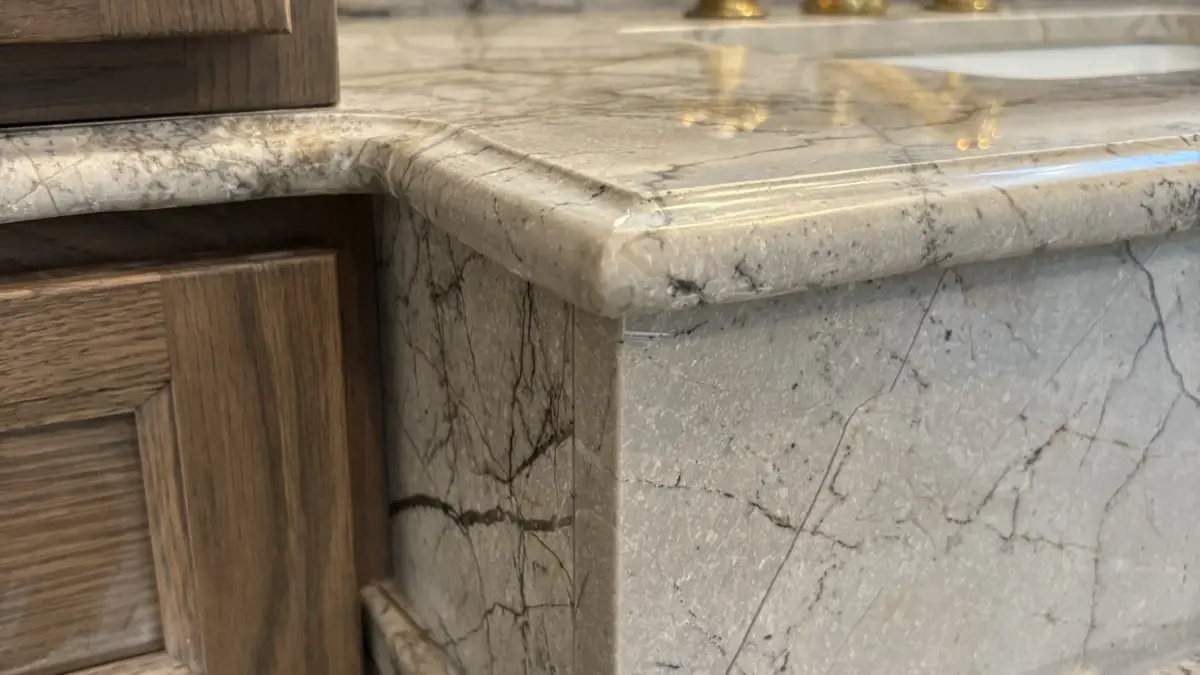
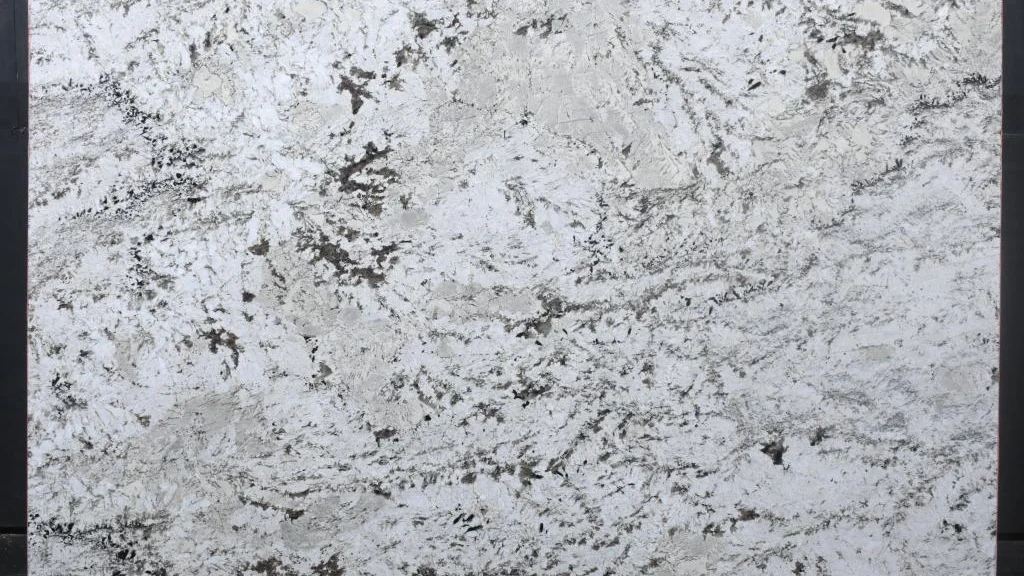
Installation itself depends on what is behind the stone. Slabs are bonded to a stable wall with an adhesive made for stone, and larger, heavier pieces get mechanical fixings as well, such as anchors or brackets under the mantel. Old brick can sometimes be clad over; sometimes it has to come off because it is uneven or crumbling. Granite tolerates high temperatures well, while marble and limestone give a classic or rustic look; sample materials appear on this page on stone fireplace surrounds.
What determines the price of a stone fireplace surround?
The stone itself has the biggest effect on cost. Different granites, marbles and limestones are priced differently, and within one type the slab thickness, color and rarity of the pattern all count. If you want marble with the veining mirrored on both sides of the opening, the fabricator has to select slabs cut from the same block, which usually means more material.
The second factor is area and the number of pieces. A simple frame made of three strips of stone is a different job from cladding a whole wall to the ceiling with cutouts for an insert, speakers or cables. Every cutout, mitered joint and decorative edge profile adds shop time. A mantel with a thicker, laminated front looks substantial, but it takes more fabrication than a flat ledge.
The third area is work on site: removing the old surround, leveling the wall, reinforcing the floor under a heavy hearth, plus delivery and carrying the slabs in. A ranch house with a ground-level entrance is a completely different situation from a high-floor apartment with no freight elevator. Ask for a quote broken down into material, fabrication and installation, so you can see where to save without giving up durability.
Measurements and photos ready? Call for a free consultation in Polish: 609-608-5750
A fireplace in a New Jersey or Pennsylvania house versus a New York apartment
Houses in Trenton, Hamilton or Ewing often have masonry fireplaces built decades ago. The brick may be uneven and the firebox openings do not always follow standard sizes, so off-the-shelf surrounds rarely fit without modification. Stone cut to measure lets the frame follow the real shape of the opening, even on an older wall with its share of irregularities.
In colonial-style homes, common around Princeton and in Bucks County, the surround should work with the wood trim, beams and millwork. Limestone or a softly patterned marble with a honed finish tends to suit these rooms. Plan the renovation outside the heating season, since the fireplace cannot be used during the work, and adhesive and grout need time before the stone is exposed to heat.
Manhattan is a different story. Many fireplaces in older buildings are now decorative, or have been converted to a gas or electric insert. Before ordering stone, ask building management whether the work needs approval, what hours it can be done and whether the slabs will fit in the elevator. If you are also thinking about new window sills, read our guide to stone window sills, since both jobs are easy to combine in one site measurement.
What to look for when choosing a contractor
A fireplace surround is precise work and heavy work at the same time. The stone has to be cut accurately and then fixed securely to a wall that is rarely perfectly straight. That makes the choice of contractor matter more here than on many other small renovations.
When comparing quotes, check these points first:
- Experience with natural stone. Ask how long the company has been working with marble and granite. Years of practice mean the contractor has already dealt with plenty of crooked chimneys and knows how to handle them.
- A chance to see and compare different stones. A good contractor will show you granite, marble, limestone and other materials before you decide. Choosing from a single type of slab narrows your options.
- Custom fabrication. Every piece of the surround should be cut for your opening and your wall, not forced into place from a ready-made kit. This matters most in older homes.
- Communication in your language. Misunderstandings come easily when settling the mantel height or the shape of the hearth. If you can go over the details in Polish, less gets lost in translation.
- A free estimate before you commit. The estimate should come before you pay anything and should spell out the scope of work clearly. That lets you compare several offers on equal terms.
Euro 1 Countertops Granite & Marble, Inc. in Ewing meets these criteria — see the full listing and client reviews.
Which mistakes most often spoil the result?
The first mistake is ordering stone before the insert or heating appliance has been chosen. Opening size and required clearances depend on the specific model, so stone cut by eye may not fit later. Appliance first, surround second. No wonder contractors ask about it right at the start.
The second mistake involves the mantel and the TV. A mantel mounted too low heats up, and objects placed on it can warp. A TV above a wood-burning fireplace may be exposed to heat and smoke, so decide where it goes together with the installer, not after the stone is on the wall.
The third mistake shows up after the first winter: light, unsealed stone above the firebox darkens from smoke. Sealing after installation helps, and so does sensible burning. According to the EPA, wood with a moisture content below 20 percent burns best; its guidance on wood-burning practices also lists what not to burn (such as painted or pressure-treated wood). Less smoke also means less residue on the surround.
The fourth mistake is picking stone from a palm-sized sample alone. A small piece cannot show how the pattern will spread across a whole wall or how it will look in the evening, by firelight. If you can, see the full slab your surround will be cut from, and with marble ask to be shown where the seams will fall. Granite is more forgiving, since its fine, even pattern hides joints better; boldly veined marble needs a careful cutting plan.
A well-planned fireplace surround lasts for years and needs little beyond periodic cleaning and resealing. What matters is the order: firebox and appliance first, then measurements, and only then the choice of stone and finish.
If you already have measurements and photos, the conversation with a contractor will be shorter and the estimate more accurate. Bring a few pictures of rooms you like as well, so it is easier to settle on the color and pattern of the stone.
Talk to an expert at Euro 1 Countertops Granite & Marble, Inc. — call: 609-608-5750
This guide offers general tips for homeowners and apartment owners. Required clearances to combustible materials and installation rules are set by the heating appliance instructions, local codes and the installer.