
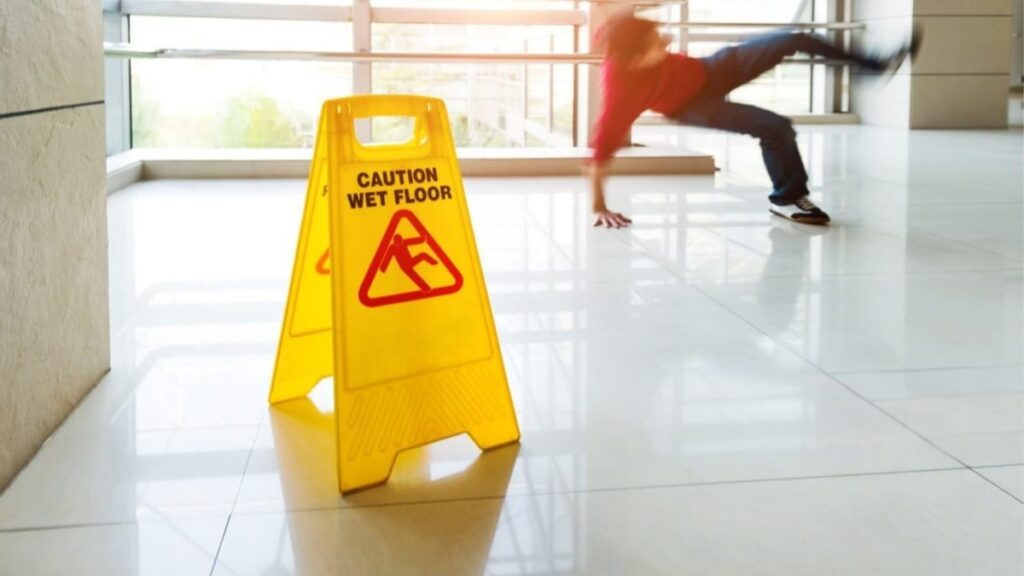
In New York, the property owner is responsible for the safety of the sidewalk under NYC Administrative Code §7-210. To recover compensation after a slip or fall, you must prove negligence (constructive notice) and a causal link between the condition of the property and your injuries. Compensation covers medical costs, lost wages and pain and suffering.
A slip on a slick sidewalk, a trip over broken pavement, a fall on a building’s stairs — every year thousands of people in New York are injured on someone else’s property. Often the victims don’t know they have a right to compensation from the building’s owner or manager who neglected to keep the conditions safe. New York law is clear: if you were harmed by a dangerous condition on a property, you can seek compensation.
Sounds simple? In practice, not entirely. Proving negligence requires preserving evidence quickly, knowing the procedures, and having legal experience.
Premises liability in NYC — Administrative Code §7-210, owner duties and constructive notice
NYC Administrative Code §7-210 changed the rules for injured pedestrians in New York. Since 2003, the property owner (not the city) has been responsible for the condition of the sidewalk adjacent to the building. That duty includes: removing snow and ice in winter, repairing cracks and defects in the pavement, maintaining lighting, and marking dangerous areas. Neglecting these duties, plus a pedestrian accident, equals legal liability for the owner.
To win a premises liability case, you must establish three elements. First: the owner had a duty to keep the property safe. Second: the owner neglected that duty (for example, failed to clear ice for several days, or failed to repair a defect). Third: that neglect was a direct cause of your accident and injuries. The key concept is “constructive notice” — you must prove the owner knew, or should have known, about the dangerous condition long enough to fix it.
New York courts apply the rule of comparative negligence — if the injured person bore some share of fault (was distracted, wore improper footwear), the award is reduced proportionally, but not eliminated. This is an important rule: even if you bear 20% of the fault, you can still recover 80% of the compensation. That is why quickly gathering evidence — photographs of the scene, witnesses’ contact details, medical documentation — is fundamental.
Types of compensation and what drives the amount
Compensation after an accident on a property covers three main categories. Medical costs: the ER visit, X-ray/MRI imaging, surgery (if a fracture requires it), rehabilitation, physical therapy, pain medication, orthopedic equipment. In cases of serious injury — a hip fracture in a senior, a head injury — treatment costs can be very high and depend on the individual case.
Lost wages: if the accident kept you out of work for weeks or months, you have a right to compensation for the lost income. The amount depends on your occupation, salary and the time confirmed by a doctor’s note. If the injuries cause a permanent limitation on your ability to work — for example, you can’t return to physical construction work after a knee fracture — you can seek compensation for reduced future earning capacity.
Pain and suffering: the amount awarded for the physical and psychological suffering tied to the injury. In New York there is no fixed cap on this category — the amount depends on the severity of the injuries, the age of the injured person, and the lawyer’s skill in presenting the case. The more serious the injury, the higher the value of the claim — a broken arm with a full recovery yields smaller amounts than a hip fracture requiring a replacement or a head injury with lasting consequences. Every case has to be assessed individually.
The amount is also shaped by who is responsible and what insurance they carry. A claim against the owner of a small building looks different from one against a retail chain with a multi-million-dollar policy, and different again when liability is split among several parties — the owner, a commercial tenant, and a cleaning company. Keep in mind that the same fall on a construction site falls under entirely different, far more favorable rules: if it happened in connection with work at a height, the Scaffold Law applies, as explained in the guide to construction accidents and liability under §240. Identifying the correct legal basis can multiply the value of a claim.
Call for a free consultation in Polish: 516-646-1188
What’s specific to NYC — icy sidewalks, old buildings, subway stairs and tenants
New York has unique premises liability challenges. In winter, icy sidewalks are the number-one cause of pedestrian accidents — §7-210 requires the owner to remove snow and ice within 4 hours after precipitation stops (or 14 hours if it stopped overnight). In practice: walk through Greenpoint or Ridgewood after a February snowstorm and count how many sidewalks are cleared on time. Not many.
Old rental buildings in Brooklyn and Queens — Williamsburg, Bushwick, Maspeth — pose an added risk. Unstable entrance steps, worn pavement around the building, missing handrails, dimly lit stairwells. Tenants often rent in such buildings for the lower rent — and risk a fall every day on stairs they’ve complained about for months. The owner has a duty to repair, but without legal pressure often doesn’t.
Subway stairs and MTA stations are a separate category — the Metropolitan Transportation Authority is responsible for their condition, and the claims procedure differs from private property (a shorter deadline to file a Notice of Claim — 90 days). Whether you fell on a sidewalk, in a store, on a stairwell or in the subway, the law gives you the tools to pursue compensation. But speed of response is critical.
What to look for when choosing a premises liability lawyer
- Focused experience in premises liability — not general personal injury. Slip and fall cases have their own particulars: §7-210, constructive notice, comparative negligence, MTA procedures. A lawyer who mainly handles car accidents won’t know the nuances of proving an owner’s negligence. Look for a firm with a portfolio of premises liability cases.
- Fast response and preservation of evidence. Store surveillance footage is erased after 30 days. Ice melts. Sidewalk defects get repaired. Witnesses forget the details. A firm that acts immediately — sends a photographer to the scene, secures footage, gathers statements — gives you an advantage you can’t recover after weeks of delay.
- Communication in Polish and an understanding of tenants’ situations. Tenants in old Brooklyn and Queens buildings often don’t report accidents for fear of the landlord, or out of a belief that “nothing can be done.” A firm with a Polish-speaking team understands this dynamic and can explain your rights clearly — without condescension or pressure.
- Contingency fee — no cost until you win. The lawyer works on contingency: you don’t pay until you win. That eliminates financial risk for the injured person and motivates the firm to fight for the highest compensation.
- Willingness to go to trial. Property owners’ insurers offer higher settlements when they know the firm across the table regularly wins trials. Ask about the ratio of settlements to trials — that’s a measure of real negotiating strength.
Sanocki Newman & Turret, with offices in Brooklyn, Queens and Manhattan, meets these criteria — see the full profile and client reviews
The seasonality of accidents — winter (snow and ice), summer (renovations), code violations
Property accidents follow a clear seasonal pattern. In winter, slips on ice and snow dominate — especially on sidewalks in front of older buildings where owners don’t comply with §7-210. In spring and summer, accidents tied to renovations rise: holes in concrete in front of buildings under renovation, scaffolds blocking sidewalks without proper marking, open cellar hatches. On NYC 311 you can report a dangerous sidewalk — and that report can later serve as evidence that the problem was known.
Building Code violations strengthen a case. Stairs without the required riser height, missing handrails, inadequate lighting in a stairwell — these are not just neglect but a deliberate disregard of the rules. Documentation from the NYC Department of Buildings (DOB) can serve as evidence in a case. Important: if the fall happened in a building with a history of DOB violations, your negotiating position is much stronger.
A common and costly mistake by injured people is downplaying their injuries right after a fall. Adrenaline masks pain, and many serious injuries — hairline fractures, ligament damage, intracranial bleeds — only surface hours or days later. Not seeing a doctor in the first 24–48 hours is a gift to the insurer, who will use the gap in treatment to argue the injuries aren’t related to the accident. The consequences of a fall can be surprisingly severe: in seniors a hip fracture can begin a downward health spiral much like the one seen in care neglect, and a head injury with lasting effects is valued in terms close to the most serious medical malpractice cases and patient compensation. That is why medical documentation from day one matters as much as photographs of the scene.
A slip or fall on someone else’s property in New York is not bad luck — it is often the result of neglect for which the owner is responsible. The law is on your side, but it requires quick action: preserve the evidence, see a doctor, and contact a lawyer within days, not weeks.
Check your rights after a fall — call: 516-646-1188
Prior results do not guarantee a similar outcome. This is attorney advertising. Every case is different — consult a licensed attorney. This article is for general information only and is not legal advice.