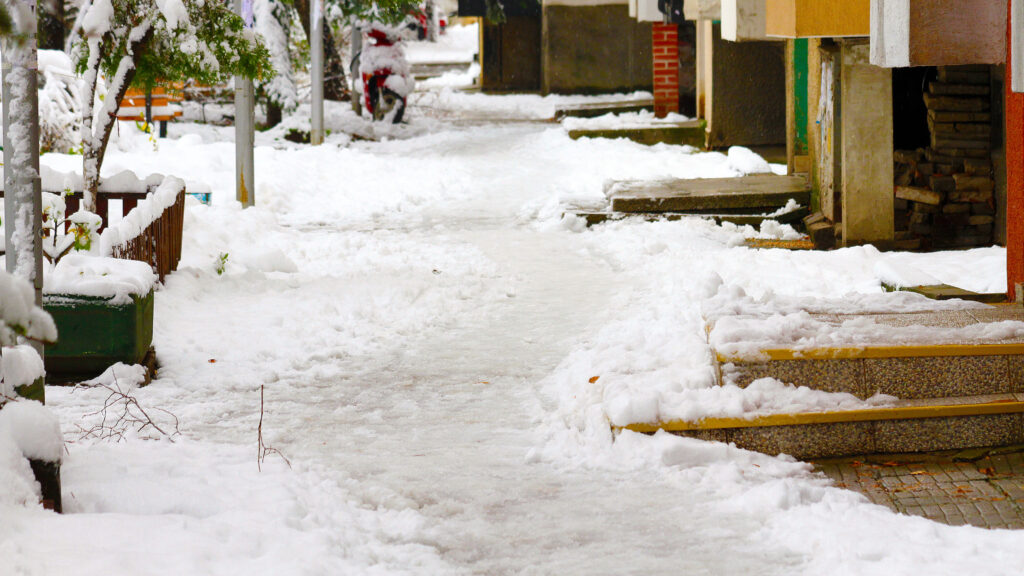
February, Greenpoint, 7 a.m. You’re walking to the bus stop on Nassau Avenue, the sidewalk in front of the tenement house is covered in a sheet of ice – no one salted it. You fall on your back. Ambulance. Hospital. Six weeks off work. And the landlord claims he “didn’t know.” In New York, that’s not an excuse – it’s grounds for compensation.
Duty to clear snow – what NYC law says
Administrative Code §16-123. Property owners must clear snow and ice from sidewalks within 4 hours after daytime precipitation stops or 4 hours after sunrise if the precipitation was at night. This applies to single-family homes, tenement houses, commercial buildings, and co-ops/condos.
Didn’t clear the snow? Someone slipped? They are liable.
One thing to note: the City of New York itself is responsible for clearing snow from roadways and pedestrian crossings at intersections. Did you fall at a crosswalk? Lawsuit against the city – and here the deadline is shorter: Notice of Claim within 90 days. Not 3 years. Ninety days.
Tripping on the sidewalk – Sidewalk Law
Since 2003, owners of properties adjacent to the sidewalk are responsible for its maintenance and repair. Cracked slabs, uneven surfaces, protruding curbs – if you tripped and fell, the property owner is liable. Not the city. With a few exceptions: owner-occupied one-family homes.
Evidence that makes a difference: dated photos of the sidewalk, DOT inspection reports, previous 311 complaints. If someone reported the same defect before you – that’s a powerful argument. The owner “knew and didn’t fix it.”
→ Fell on a sidewalk or icy crosswalk? Check out the Jodré Brenecki profile in the PolishPages directory.
4 things to do right after a fall
First: don’t move if you feel pain – call for help. Second: photos. Ice, hole, wet floor, missing sign. You have a phone – use it. Third: report the accident – to the landlord, store manager, or via 311. Preferably in writing. Fourth: doctor. The same day.
One mistake we see regularly: the victim says “I’m fine” at the scene, and a week later goes to the doctor because the pain intensifies. The insurer will exploit this gap. “Since you walked for a week without seeing a doctor, the injury must not be serious.” Don’t give them that ammunition.
What to look for when choosing a slip and fall attorney
- Knowledge of NYC sidewalk and snow removal regulations – Sidewalk Law, Administrative Code §16-123, the Prior Written Notice rule. These are specific regulations and the attorney must know them by heart, not look them up on Google during your first consultation.
- Experience in securing evidence from 311 and DOT – previous complaints from neighbors are one of the strongest pieces of evidence in slip and fall cases. A law firm that knows how and where to obtain them strengthens your case before you even file a lawsuit.
- Service in Polish – describing the circumstances of the fall and your ailments in your own language is a necessity for strong documentation.
- “No win, no fee” system – standard in the industry, but confirm there are no hidden fees.
→ The Jodré Brenecki law firm handles slip and fall cases on a “no win, no fee” basis – check out their profile in the PolishPages directory.
A fall on the sidewalk is not bad luck. Someone had a duty to clear the snow, repair, or secure the area – and they didn’t do it. New York law allows you to hold them accountable. Call for a free consultation: 347-563-2605.