Choosing a custom handrail and railing comes down to three things: safety, a good match with your interior and a durable material. Stainless steel suits modern homes, wrought iron suits classic ones, wood adds warmth and glass makes a space feel larger. Building codes govern railing height and the gaps between balusters.
The railing is often the first thing to go when a stairwell gets updated. Often the treads are still solid, but the handrail is shaky, the balusters have worked loose, or the whole thing simply clashes with the new floors and furniture. Replacing just the railing is a way to refresh a space without tearing out the stairs.
This guide covers the decisions that come up before you order: which material to choose, how interior and exterior railings differ, what affects the cost, when custom balusters are worth it and how to prepare for a conversation with a fabricator.
Which railing material is right for my home?
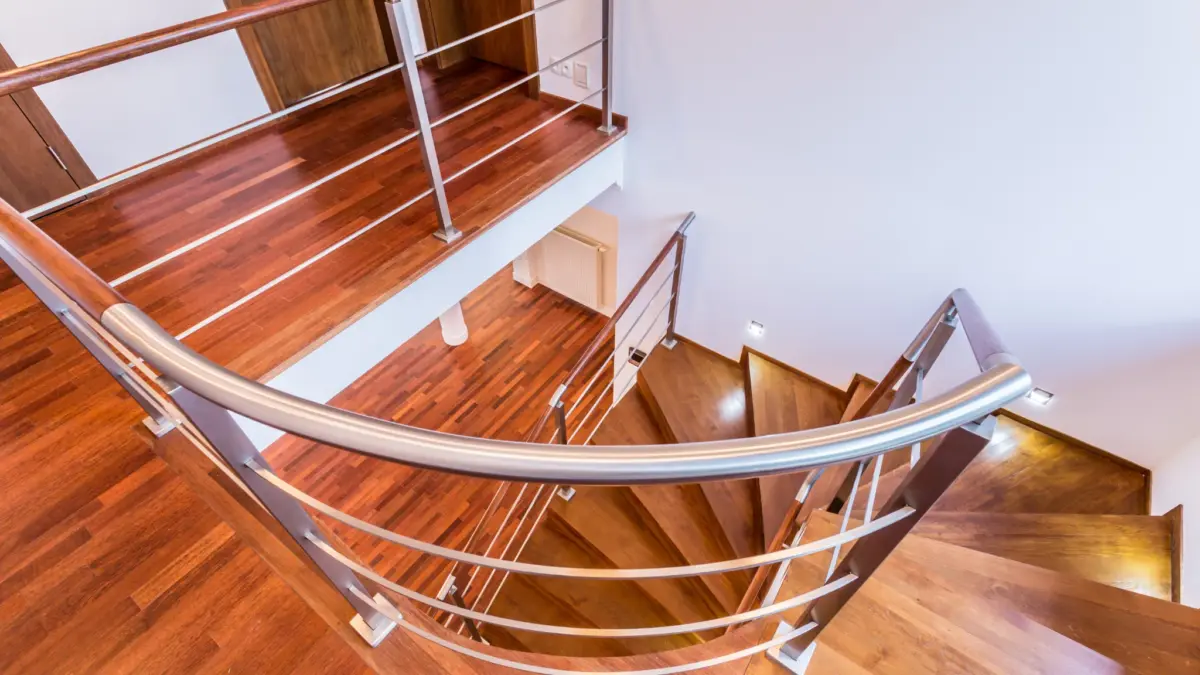
Stainless steel is the choice for people who like clean lines and a contemporary look. It resists corrosion, and slim rods or cables keep sight lines open. It pairs well with wood treads and with a wood handrail that warms up the overall design.
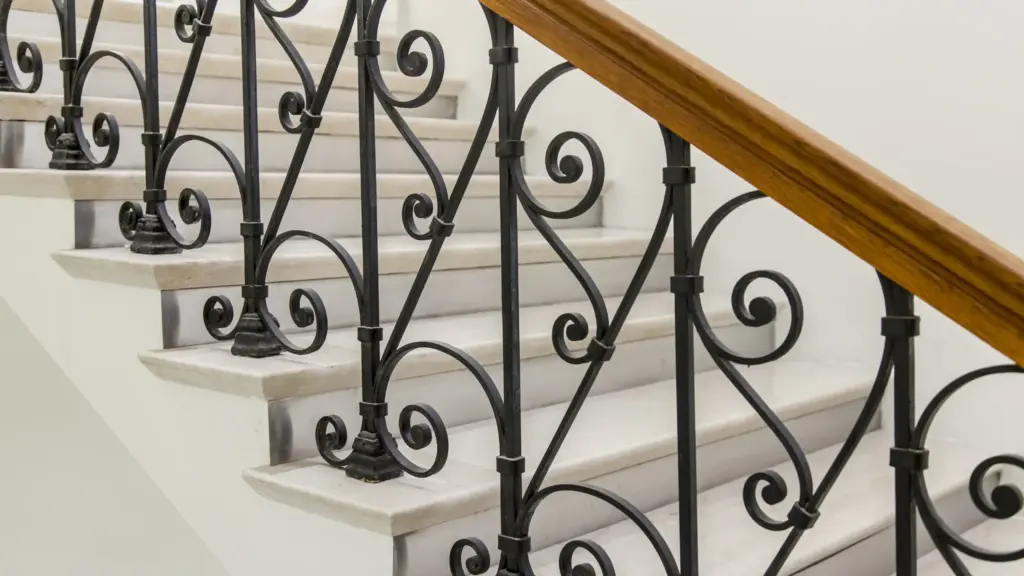
Wrought iron offers the most room for ornament: scrolls, spirals and botanical motifs. It suits traditional homes and formal entry halls where the railing is meant to draw the eye. Because it is made by hand, the pattern can be matched to other elements of the house, such as a fence or gate.
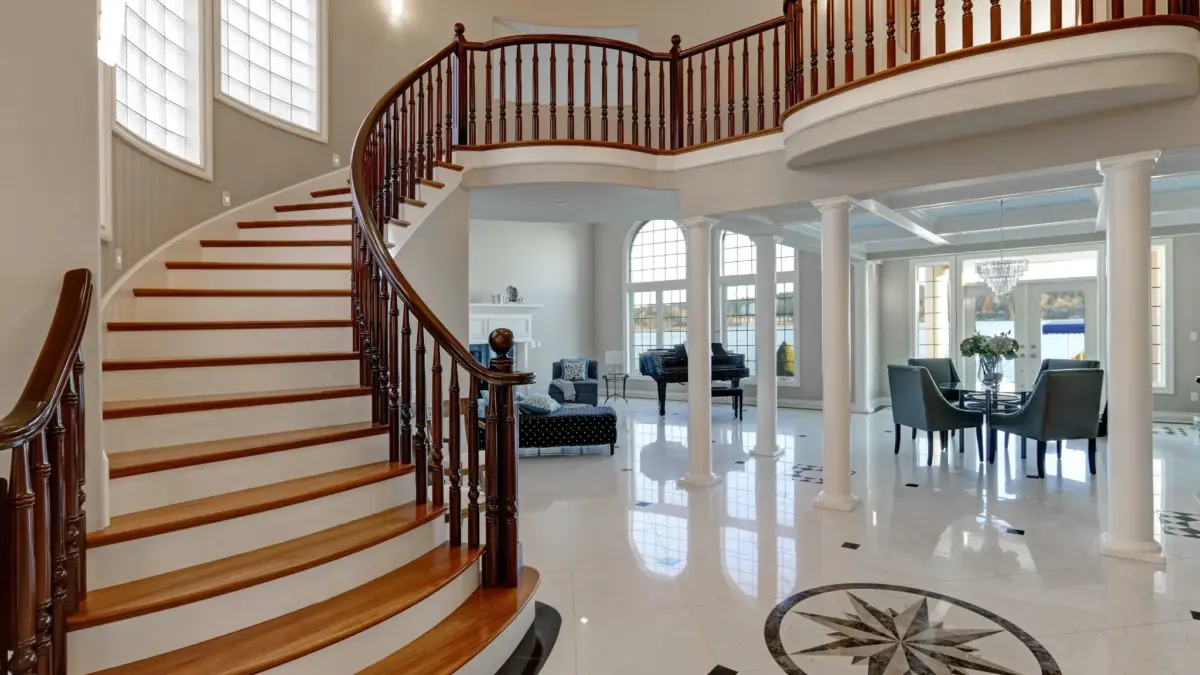
Wood is the warm, traditional option. Wood balusters, newel posts and handrails are easy to match to treads and flooring. Glass, on the other hand, makes the railing almost disappear: glass panels let light through and make a stairwell feel larger, something owners of smaller homes and apartments appreciate.
Many homeowners go for mixed materials – for example, metal balusters capped with a wood handrail, or glass panels paired with a stainless steel handrail. Wood feels good under the hand, while metal and glass keep the look light.
Interior or exterior railing – what’s the difference?
An interior railing mainly needs to suit the style of the home and feel comfortable in daily use. Outdoors – on front steps, a deck or a balcony – it also has to stand up to rain, freezing temperatures and road salt. The material and its protective finish should be chosen so the railing doesn’t deteriorate after a few winters.
For exterior work it also pays to think about consistency: railings on the front steps, the fence and the gate look best when they share one style.
When do custom balusters make sense?
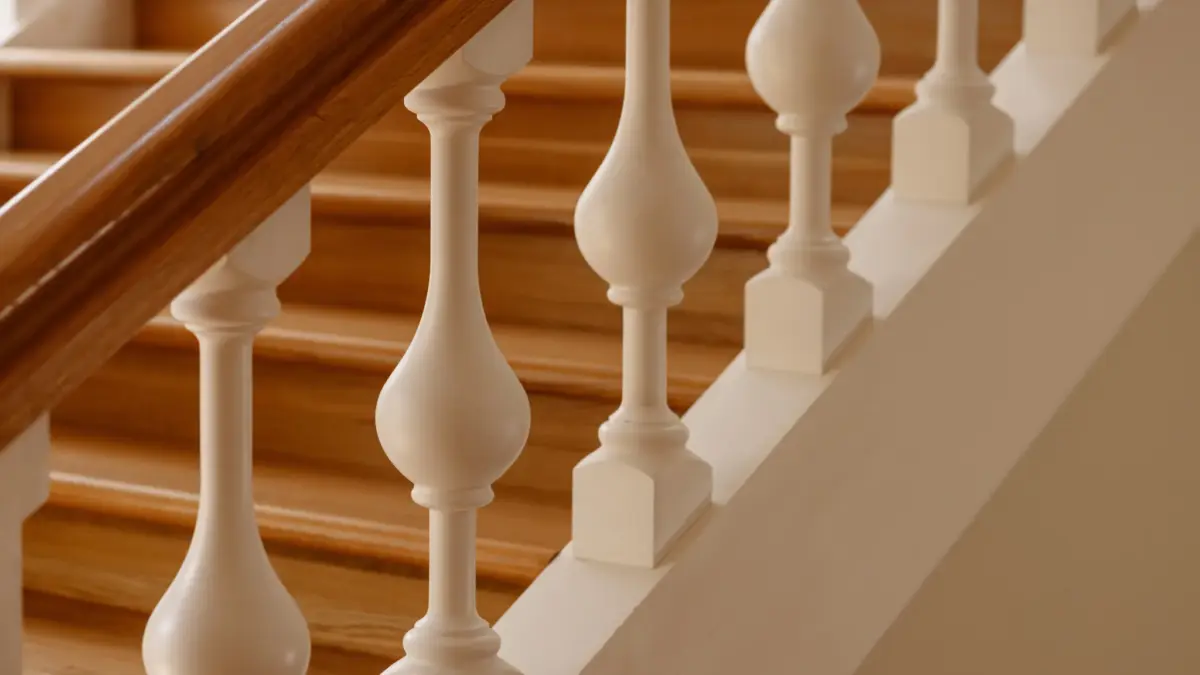
Balusters are the vertical pieces that fill in a railing. Stock models work for standard stairs, but older homes often need missing or damaged balusters replaced to match the ones that stay. Ordering custom pieces lets you recreate an original pattern or design something entirely new.
Custom balusters are made in wood or metal to the client’s specifications – shape, dimensions and finish. They are also the answer when an architect has designed an unusual railing that can’t be assembled from catalog parts. For a step-by-step look, from matching an original pattern to writing a spec, see our guide to custom stair balusters.
What affects the cost of a handrail and railing?
The biggest factors are the length of the railing and the number of turns: a straight run is simpler to build than a railing that follows a curve or wraps around a landing. The second factor is material and ornamentation – hand-forged details take more work than plain bars.
Installation and the condition of the existing stairs matter too: can the new railing be anchored to the current treads and newel posts, or do they need to be reinforced or replaced? When comparing quotes, check whether they include removing the old railing, fabrication, delivery and installation.
Which building codes apply to railings?
A railing’s main job is to prevent falls. Its height, strength and the maximum gaps between balusters are set by building codes. New York City follows the NYC Construction Codes (code information on the NYC Buildings website); New Jersey and Connecticut have their own state codes.
It is especially important where young kids or seniors use the stairs every day, and for railings around landings, lofts and balconies. When choosing a design, ask the fabricator right away whether it meets the requirements for your building.
How do I care for a handrail and railing after installation?
Day-to-day care depends on the material. Stainless steel only needs a wipe with a soft cloth; avoid abrasive cleaners that scratch the surface. Glass cleans like a window, and it’s worth checking the panel hardware from time to time. A wood handrail wears most where hands touch it, so after some years the finish may need refreshing.
Exterior railings need more attention. After each winter, look over the metal parts and anchor points, and touch up small coating damage before rust sets in. With any railing, it’s good practice to check occasionally that the handrail and posts haven’t loosened – that’s a safety issue, not just a cosmetic one.
How does ordering from Atlantic Stairs work?
Atlantic Stairs NY, Inc. is a Polish family business founded in 1993. From its shop in Brooklyn it serves clients across the Tri-State Area – New York, New Jersey and Connecticut. The company designs, handcrafts and installs handrails and railings, both interior and exterior, in stainless steel, wrought iron, glass, wood and combinations of metal and wood. It also makes wood and metal balusters to the client’s specifications.
Every job starts with an on-site measurement. The crew checks the condition of the stairs and newel posts, advises on technical solutions and talks through the style. The design can follow the homeowner’s idea or an architect’s drawings, and the company also works with general contractors on larger renovations. Atlantic Stairs sets the installation date at the quote stage and says it keeps lead times short.
Request a free catalog and quote: 718-417-8818
Why it helps to talk it through in your own language
Ordering a railing involves many detailed questions about height, baluster spacing, mounting, finish and exactly what the quote covers. When the conversation happens in a language you are less comfortable with, it is easy to miss something or agree to a solution you don’t fully understand.
Being able to discuss the project in Polish helps settle every detail, while the technical conversation with an architect or contractor can happen in English. That way everyone involved knows what will be done and when.
How to prepare for a quote
- Take photos. The current railing, stairs, newel posts and surroundings, from several angles.
- Get a rough length. The length of the stair run and any landing or loft sections helps estimate the scope.
- Gather inspiration. Photos of railings you like speed up the choice of material and pattern.
- Bring samples if balusters need replacing. One surviving baluster, or a clear photo with measurements, makes it easier to recreate the pattern.
- Confirm timing and renovation scope. Railings usually go in after finish work, so they need to fit the schedule.
Services, project photos and contact details are in the Atlantic Stairs profile in the PolishPages directory. For a shorter overview of railing types, see our article on Poland.us.
Common mistakes when choosing a railing
The first mistake is choosing on looks alone without checking whether the design meets safety requirements. The second is mounting a new railing on posts and treads that need repair themselves. The third is overlooking the handrail: it’s the part you touch every time you go upstairs, so it should feel comfortable in the hand.
The fourth mistake is picking an outdoor material without thinking about winter and road salt. The fifth is mixing styles: a modern railing next to classic stairs and ornate doors can look random if the whole design isn’t thought through.
A well-chosen railing combines safety with a look that suits the house for years. The easiest way to get there is a design based on a measurement and a conversation about the whole interior, not just the stairwell.
Schedule a measurement and quote with Atlantic Stairs: 718-417-8818